
Key Clinical Summary & Takeaways
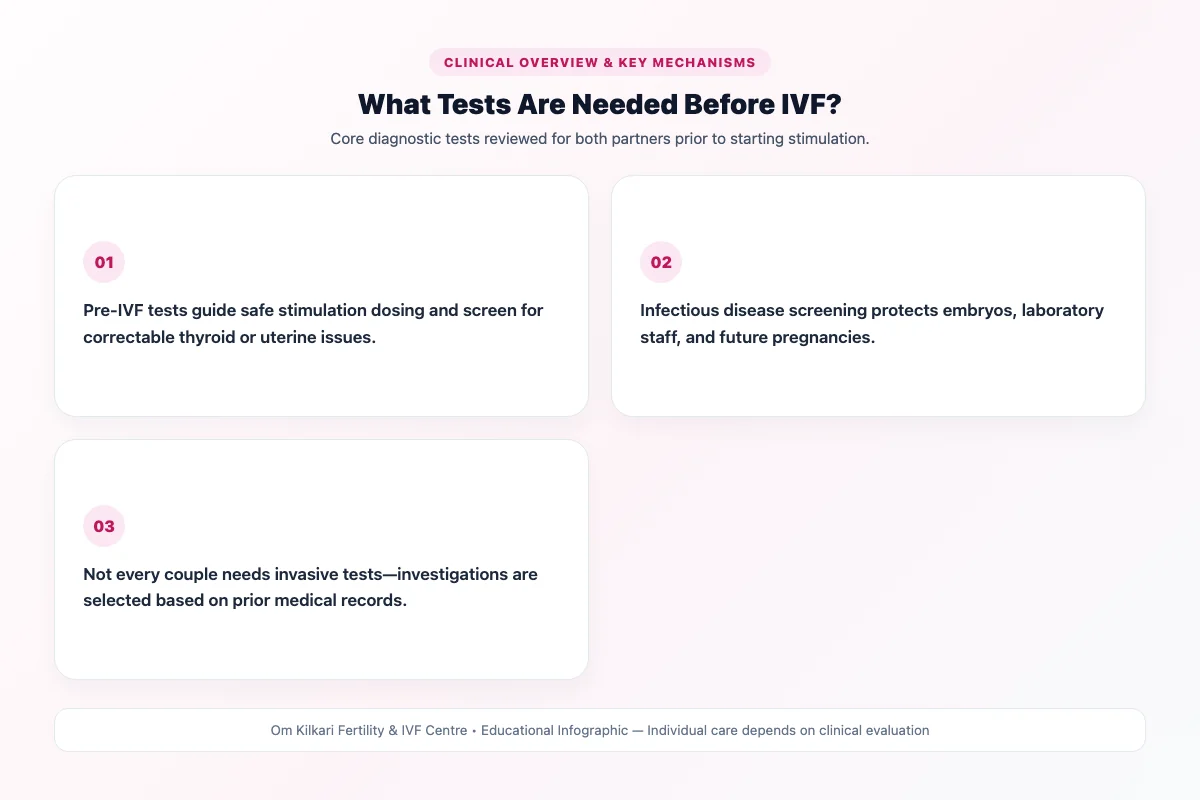
Before starting IVF, both partners undergo targeted testing to ensure safety and tailor medication protocols. Typical female investigations include ovarian reserve testing (AMH, AFC), pelvic ultrasound, thyroid/prolactin/blood sugar checks, and uterine cavity assessment; male investigations include semen analysis and viral screening (HIV, Hepatitis B, Hepatitis C) required under laboratory safety standards.
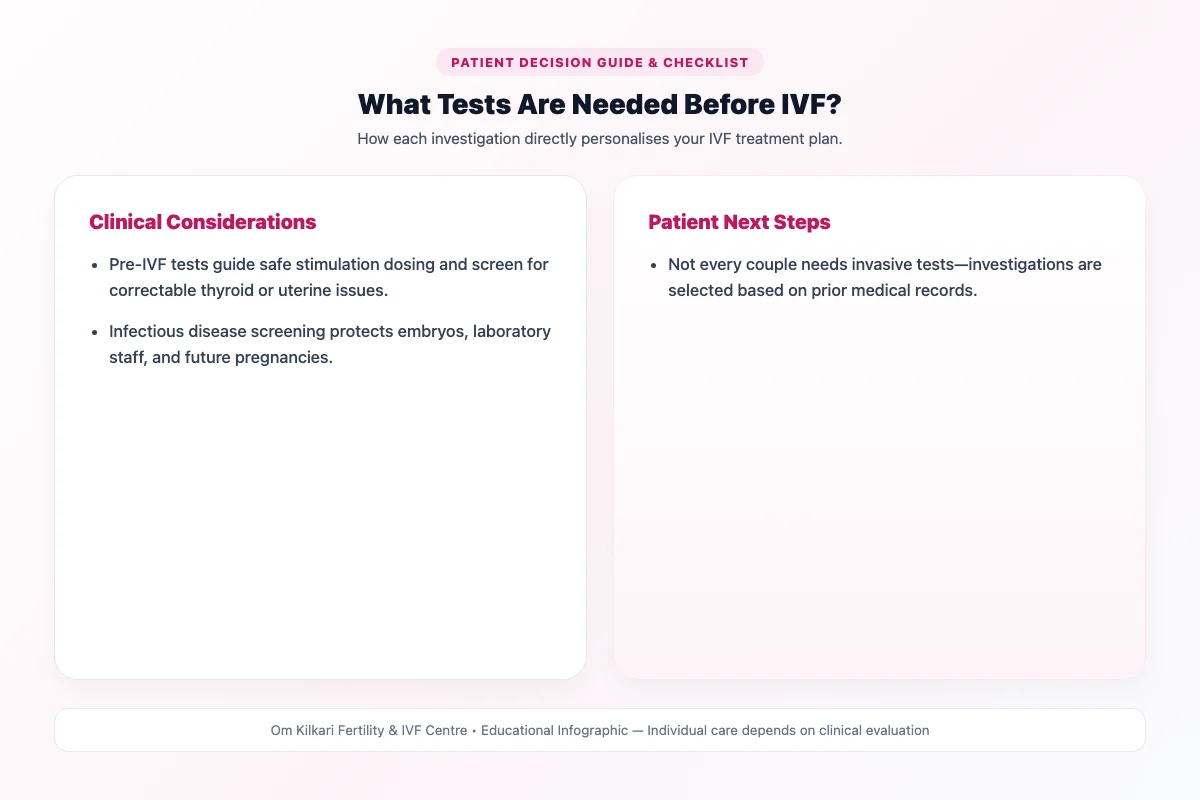
- Pre-IVF tests guide safe stimulation dosing and screen for correctable thyroid or uterine issues.
- Infectious disease screening protects embryos, laboratory staff, and future pregnancies.
- Not every couple needs invasive tests—investigations are selected based on prior medical records.
Pre-IVF Tests for the Female Partner
Clinicians evaluate ovarian reserve, uterine readiness, and general medical fitness for pregnancy:
- Pelvic ultrasound (uterus, endometrium, and antral follicle count).
- AMH and Day 2–3 hormone levels (FSH, LH, oestradiol) where indicated.
- Thyroid function (TSH), prolactin, HbA1c/blood glucose, and complete blood count.
- Rubella immunity, blood group, and infectious screening (HIV, HBsAg, HCV, VDRL).
Pre-IVF Tests for the Male Partner
The male partner undergoes a recent semen analysis (to decide between IVF and ICSI), blood group testing, and mandatory infectious screening (HIV, HBsAg, HCV, VDRL).
Your Journey Towards Parenthood Starts with the Right Guidance.
If you have been trying to conceive and would like to understand your fertility health, consult a qualified fertility specialist for personalised guidance.
Frequently Asked Questions
1. Do we have to repeat tests we recently completed at another hospital?+
Usually no—recent valid reports are reviewed first, and only outdated or missing tests (such as current viral screenings) are repeated.
2. Why is infectious screening mandatory before IVF?+
Indian ART regulations and laboratory biosafety standards require viral screening for both partners prior to gamete handling and cryopreservation.
Related Articles & Clinic Pages
Written By: Om Kilkari IVF Medical Team • Published: 2026-11-12
Authoritative Clinical References
Disclaimer: This article is for patient awareness and educational purposes only and does not replace personalised medical advice from a qualified fertility specialist.