
Key Clinical Summary & Takeaways
Ovarian reserve tests—principally the Anti-Müllerian Hormone (AMH) blood test, Antral Follicle Count (AFC) on pelvic ultrasound, and early-cycle FSH—estimate the remaining quantity of resting follicles in the ovaries. They help clinicians tailor fertility medication doses, but they do NOT measure egg quality or rule out natural pregnancy on their own.
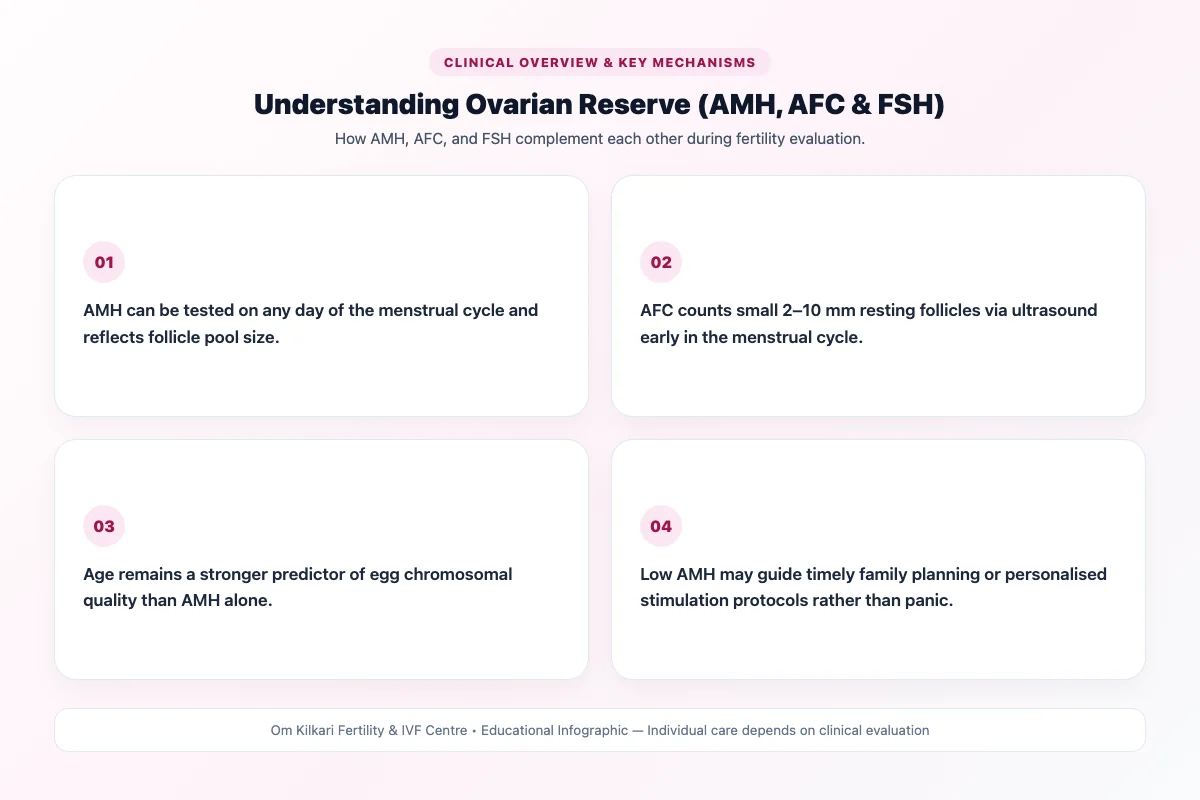
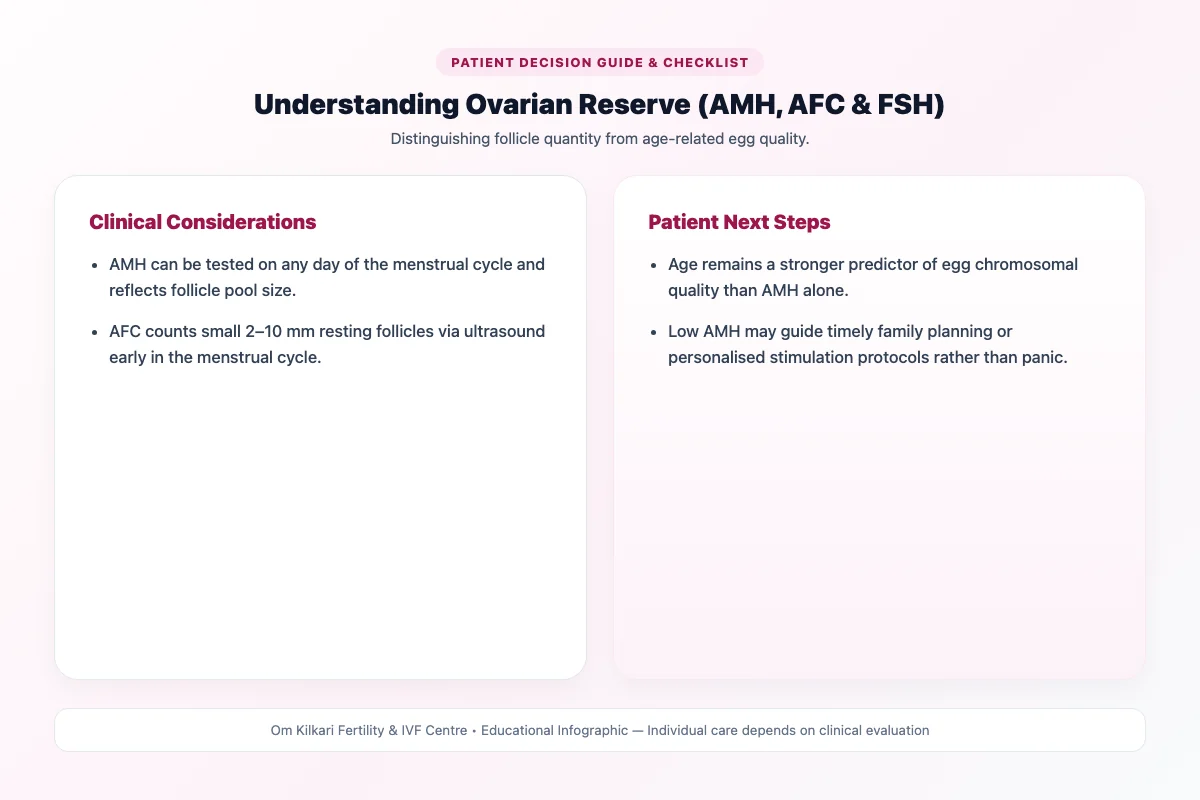
- AMH can be tested on any day of the menstrual cycle and reflects follicle pool size.
- AFC counts small 2–10 mm resting follicles via ultrasound early in the menstrual cycle.
- Age remains a stronger predictor of egg chromosomal quality than AMH alone.
- Low AMH may guide timely family planning or personalised stimulation protocols rather than panic.
Comparing AMH, AFC, and Day 2–3 FSH
Specialists combine three complementary markers to evaluate ovarian reserve: AMH (secreted by small growing follicles, stable across the cycle), AFC (direct ultrasound follicle count on Day 2–4), and FSH paired with oestradiol (measured early in the cycle).
What Low AMH Means—and What It Does Not Mean
A low AMH level suggests fewer eggs may be recruited during an IVF stimulation cycle, which makes proactive consultation valuable. However, ASRM and ACOG emphasise that AMH alone does not predict whether a woman will conceive naturally each month, especially in younger women.
Your Journey Towards Parenthood Starts with the Right Guidance.
If you have been trying to conceive and would like to understand your fertility health, consult a qualified fertility specialist for personalised guidance.
Frequently Asked Questions
1. Can AMH levels be raised with supplements or diet?+
No proven medication or supplement increases the total lifetime pool of primordial eggs, though correcting vitamin D deficiency or stopping smoking supports overall reproductive health.
2. Why is AMH very high in some women with PCOS?+
Women with polycystic ovarian morphology have many small resting follicles, each producing AMH, resulting in elevated blood AMH levels.
Related Articles & Clinic Pages
Written By: Om Kilkari IVF Medical Team • Published: 2026-11-12
Authoritative Clinical References
Disclaimer: This article is for patient awareness and educational purposes only and does not replace personalised medical advice from a qualified fertility specialist.