
Key Clinical Summary & Takeaways
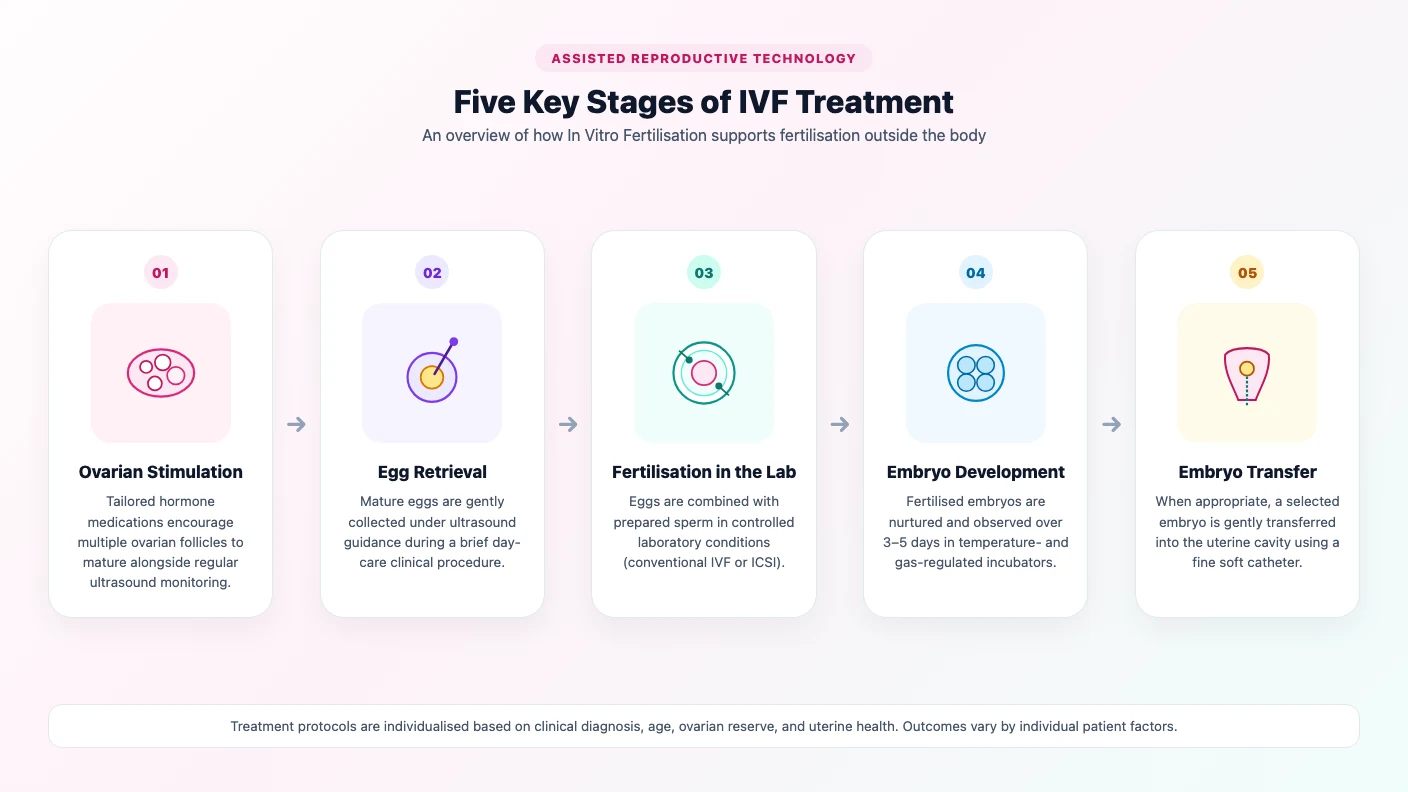
An IVF cycle unfolds across five coordinated stages over roughly 3 to 4 weeks: baseline evaluation and 8–12 days of ovarian stimulation with ultrasound monitoring, a timed trigger injection, day-care egg retrieval under sedation, 3–5 days of laboratory fertilisation and embryo culture, and embryo transfer followed by a beta-hCG blood test 12–14 days later.
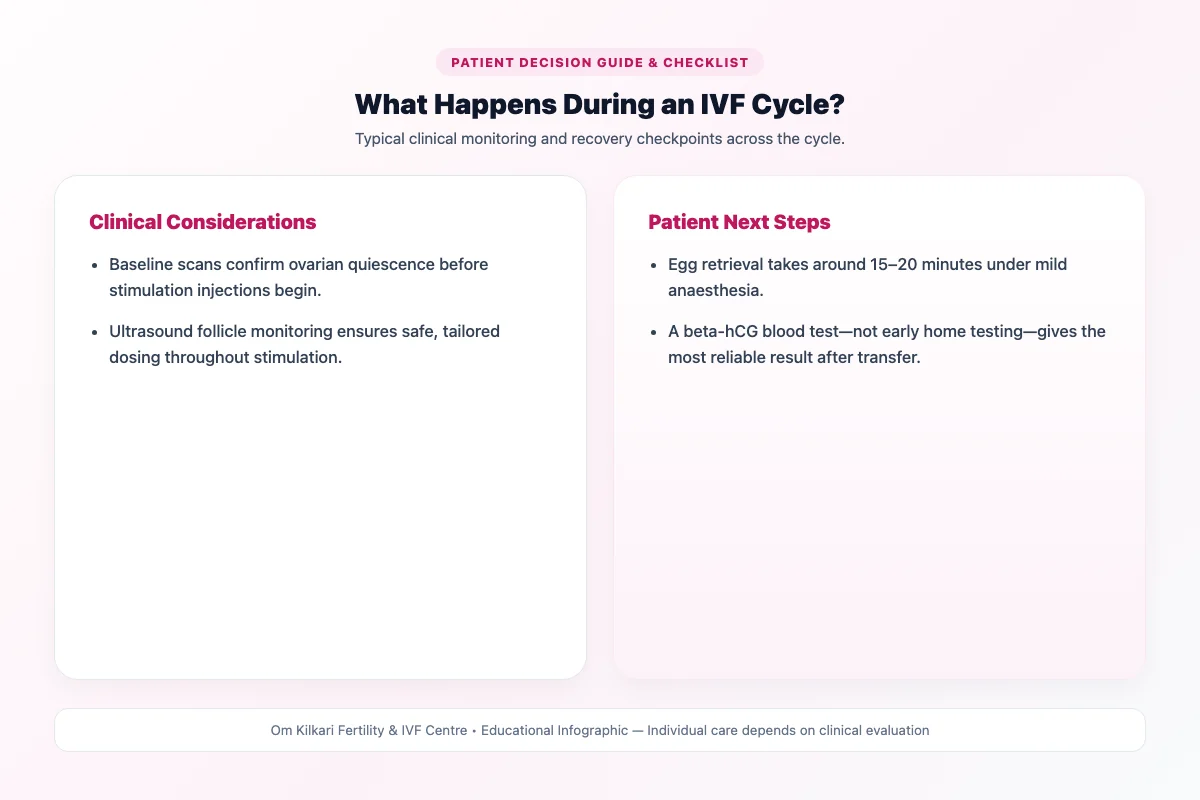
- Baseline scans confirm ovarian quiescence before stimulation injections begin.
- Ultrasound follicle monitoring ensures safe, tailored dosing throughout stimulation.
- Egg retrieval takes around 15–20 minutes under mild anaesthesia.
- A beta-hCG blood test—not early home testing—gives the most reliable result after transfer.
Stages 1–2: Baseline Evaluation, Stimulation, and Trigger
Starting around Day 2 or Day 3 of the menstrual cycle, hormonal injections stimulate multiple follicles to mature simultaneously. Regular transvaginal ultrasounds and occasional blood tests track follicle growth until they reach optimal size, when a final maturation trigger injection is given 34–36 hours before retrieval.
Stages 3–5: Egg Retrieval, Lab Culture, and Transfer
Eggs are collected gently via ultrasound-guided aspiration while the male partner provides a semen sample (or frozen sperm is thawed). Embryologists fertilise the eggs via IVF or ICSI and monitor development for 3 to 5 days before fresh embryo transfer or vitrification for a planned frozen transfer.
Your Journey Towards Parenthood Starts with the Right Guidance.
If you have been trying to conceive and would like to understand your fertility health, consult a qualified fertility specialist for personalised guidance.
Frequently Asked Questions
1. Do I need complete bed rest after embryo transfer?+
No. Medical guidelines advise resuming light normal daily activities after transfer rather than strict bed rest, while avoiding heavy lifting or strenuous exertion.
2. Why is it best to wait for the clinic's beta-hCG blood test?+
Testing too early at home can show false positives from trigger hormones or false negatives before implantation levels rise sufficiently.
Related Articles & Clinic Pages
Written By: Om Kilkari IVF Medical Team • Published: 2026-11-12
Authoritative Clinical References
Disclaimer: This article is for patient awareness and educational purposes only and does not replace personalised medical advice from a qualified fertility specialist.