Key Clinical Summary & Takeaways
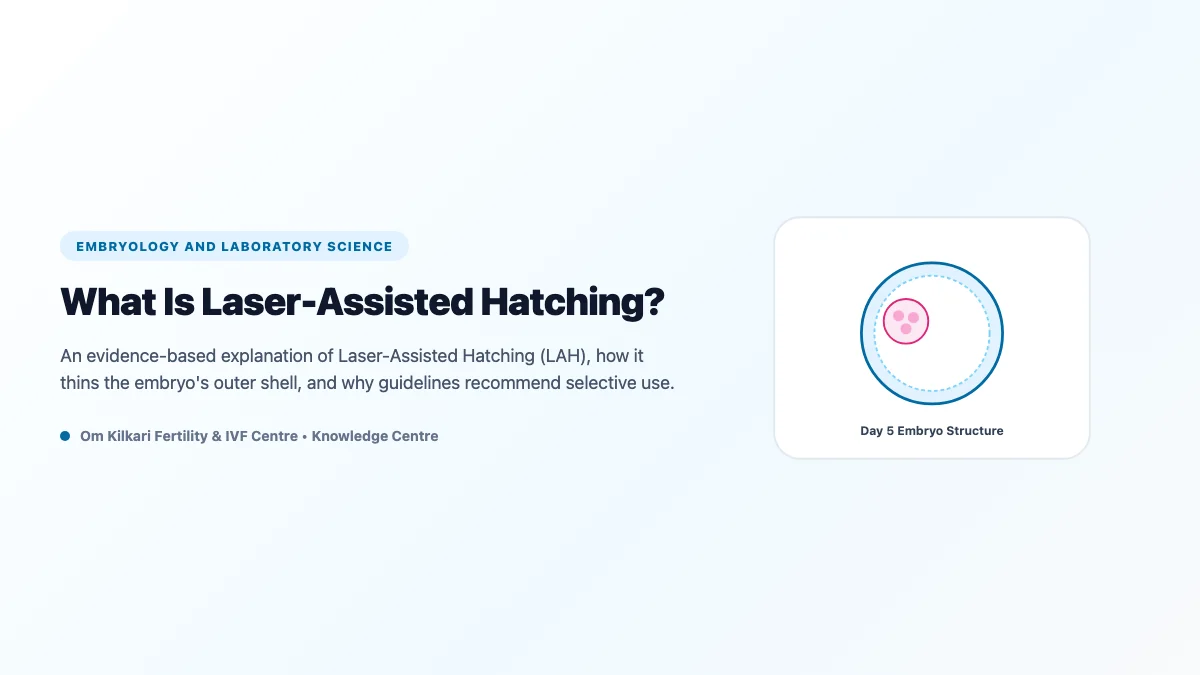
Laser-Assisted Hatching (LAH) is a micro-laboratory technique where a precise, non-contact laser gently thins or creates a tiny opening in the embryo's outer protective shell (zona pellucida) just before transfer. ASRM guidance advises against routine use for all IVF patients, reserving it selectively for cases such as thickened zona, frozen-thawed embryos, or repeated implantation failure.
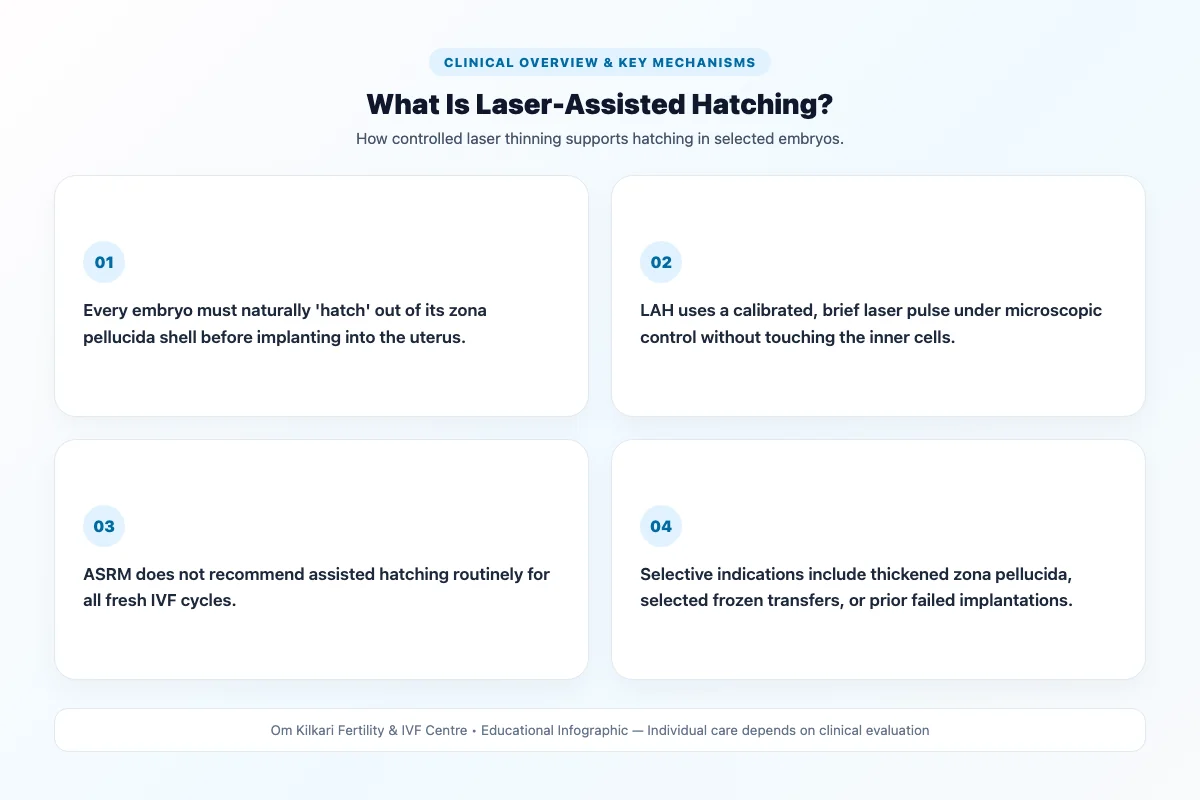
- Every embryo must naturally 'hatch' out of its zona pellucida shell before implanting into the uterus.
- LAH uses a calibrated, brief laser pulse under microscopic control without touching the inner cells.
- ASRM does not recommend assisted hatching routinely for all fresh IVF cycles.
- Selective indications include thickened zona pellucida, selected frozen transfers, or prior failed implantations.
Why Embryos Hatch and How Laser-Assisted Hatching Helps
As a blastocyst expands inside the uterus, it must break through its outer glycoprotein shell (the zona pellucida) to attach to the endometrium. Occasionally—especially with advancing age or after cryopreservation—this outer shell can appear thicker or less elastic.
Using an infrared laser integrated into the microscope, an embryologist makes a controlled microscopic thinning in the shell seconds before embryo transfer.
Selective Use Recommended by Clinical Guidelines
ASRM Practice Committee reviews have shown that routine assisted hatching does not improve live birth rates in good-prognosis fresh IVF patients and carries a small risk of monozygotic twinning. Therefore, embryologists and clinicians discuss LAH only when specific embryo or patient factors warrant it.
Your Journey Towards Parenthood Starts with the Right Guidance.
If you have been trying to conceive and would like to understand your fertility health, consult a qualified fertility specialist for personalised guidance.
Frequently Asked Questions
1. Can the laser harm the embryo?+
When performed by trained embryologists with calibrated equipment, the laser targets only the outer zona edge furthest from the embryo's cells.
2. Is Laser-Assisted Hatching mandatory in every IVF cycle?+
No. Many embryos hatch naturally without assistance, and guidelines support selective rather than universal use.
Related Articles & Clinic Pages
Written By: Om Kilkari IVF Medical Team • Published: 2026-11-12
Authoritative Clinical References
Disclaimer: This article is for patient awareness and educational purposes only and does not replace personalised medical advice from a qualified fertility specialist.