
Key Clinical Summary & Takeaways
IVF outcomes depend on multiple individual biological factors rather than a single universal percentage. Female age, egg and sperm quality, embryo development to the blastocyst stage, uterine receptivity, underlying conditions such as endometriosis or tubal disease, and laboratory culture standards all influence the likelihood of implantation and live birth.
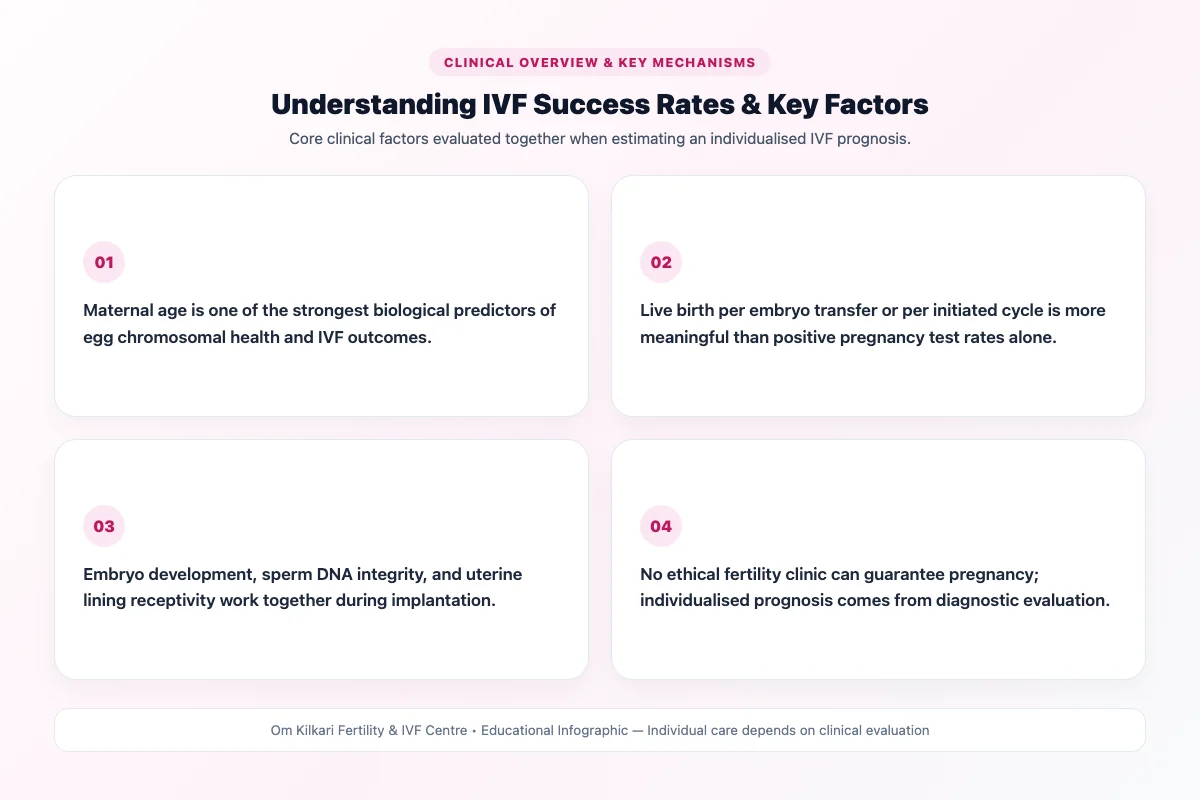
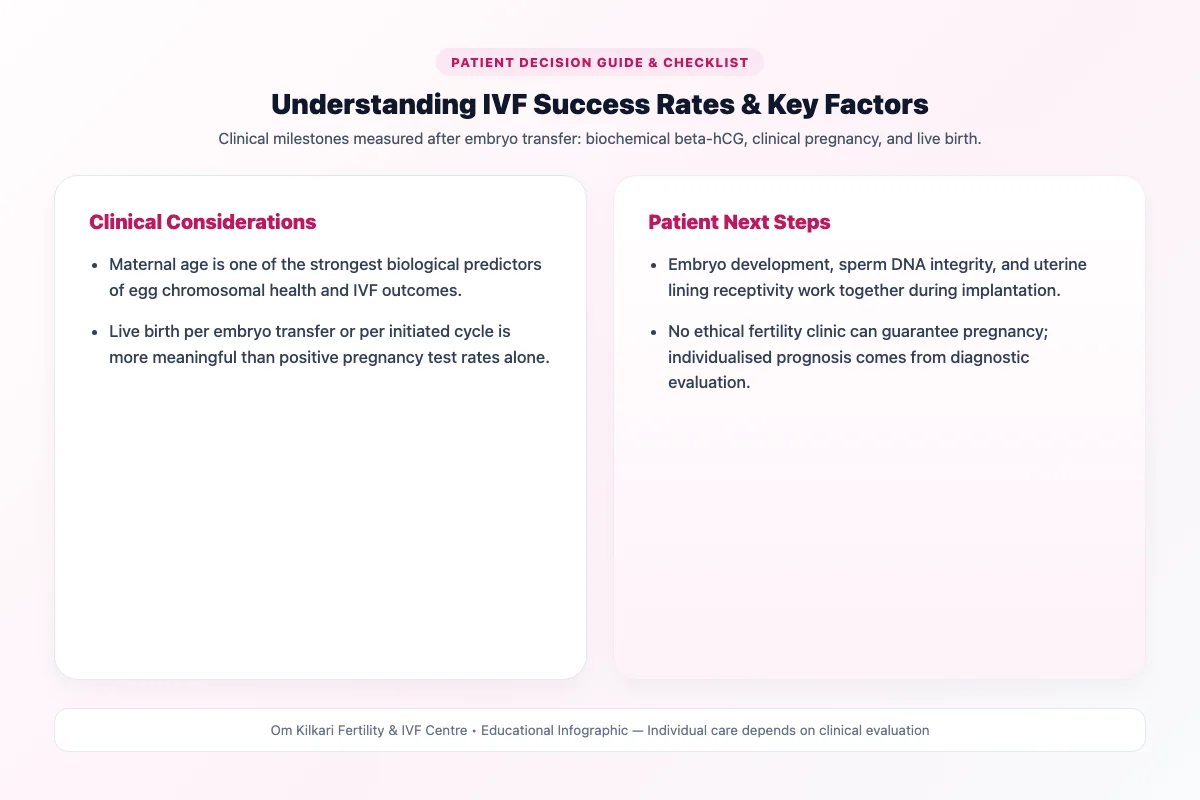
- Maternal age is one of the strongest biological predictors of egg chromosomal health and IVF outcomes.
- Live birth per embryo transfer or per initiated cycle is more meaningful than positive pregnancy test rates alone.
- Embryo development, sperm DNA integrity, and uterine lining receptivity work together during implantation.
- No ethical fertility clinic can guarantee pregnancy; individualised prognosis comes from diagnostic evaluation.
How Are IVF Outcomes Measured Clinically?
When couples research IVF success rates, they often encounter confusing terminology. Clinics and international registries such as ASRM, ESHRE, and HFEA distinguish between biochemical pregnancy (an initial rise in beta-hCG hormone), clinical pregnancy (a gestational sac seen on ultrasound), and live birth rate.
Live birth per initiated cycle or per embryo transfer gives the clearest picture of treatment effectiveness. Comparing raw numbers between clinics can be misleading because patient age profiles, diagnostic complexity, and embryo transfer policies vary widely.
Why Maternal Age and Ovarian Reserve Matter
Women are born with a finite pool of eggs, and both egg quantity and chromosomal quality gradually decline with age—most noticeably after age 35 and more sharply after age 40. Because chromosomal integrity affects whether an embryo can implant and develop normally, age remains the single most influential factor in IVF.
Ovarian reserve tests such as Anti-Müllerian Hormone (AMH) and Antral Follicle Count (AFC) help specialists estimate how the ovaries may respond to stimulation medications. While AMH reflects egg quantity, it does not measure egg quality on its own.
- Younger age generally correlates with a higher proportion of chromosomally normal embryos.
- AMH and AFC guide tailored stimulation dosing to balance egg yield and patient safety.
- Older age or diminished ovarian reserve may require personalised protocols or realistic multi-cycle planning.
Embryo Development, Sperm Factors, and Laboratory Quality
Fertilisation and early embryo growth depend equally on egg and sperm health. Severe male-factor infertility, impaired sperm motility, or elevated sperm DNA fragmentation can affect fertilisation and blastocyst formation.
Inside the embryology laboratory, stable temperature, pH, air filtration, and incubator conditions protect delicate embryos. Techniques such as ICSI, extended Day-5 blastocyst culture, or laser-assisted hatching are used selectively when clinically indicated—not as automatic guarantees.
Uterine Health, Implantation, and the Beta-hCG Test
Even a well-developed embryo requires a receptive uterine lining (endometrium) to implant. Conditions such as untreated uterine polyps, fibroids distorting the cavity, intrauterine adhesions, or hydrosalpinx (fluid-filled blocked tubes) can lower implantation potential if left unaddressed.
Roughly 12 to 14 days after embryo transfer, a blood beta-hCG test checks whether implantation has occurred. An appropriate rise in beta-hCG is followed by an early ultrasound to confirm clinical pregnancy.
Questions to Discuss With Your Fertility Specialist
Before starting an IVF cycle, ask your doctor to explain your personalised prognosis based on your age, AMH, semen analysis, and uterine evaluation rather than relying on broad clinic averages.
- Based on our reports, what is our realistic chance of success per cycle?
- Are fresh or frozen embryo transfers recommended in our situation?
- Do any uterine or tubal findings need correction before embryo transfer?
Your Journey Towards Parenthood Starts with the Right Guidance.
If you have been trying to conceive and would like to understand your fertility health, consult a qualified fertility specialist for personalised guidance.
Frequently Asked Questions
1. Does a positive beta-hCG test after IVF guarantee a full-term pregnancy?+
No. A positive beta-hCG confirms biochemical implantation, after which follow-up blood tests and an early ultrasound confirm a clinical pregnancy and fetal heartbeat.
2. Does retrieving more eggs always mean higher IVF success?+
Not necessarily. Egg quality and maturity matter as much as quantity, and excessive stimulation carries a risk of ovarian hyperstimulation syndrome (OHSS), which specialists actively prevent.
3. Can lifestyle changes improve IVF outcomes?+
Stopping smoking and tobacco, maintaining a healthy weight, managing thyroid or blood sugar levels, and following balanced nutrition support overall reproductive health before an IVF cycle.
4. Why do some couples need more than one IVF cycle?+
Human reproduction is naturally selective, and not every retrieved egg fertilises or forms a viable embryo. Multiple cycles or frozen embryo transfers from one retrieval can cumulatively improve the chance of parenthood.
5. Should we trust clinics that advertise guaranteed IVF pregnancy?+
No. Medical guidelines advise caution against guaranteed pregnancy claims because biological response, embryo development, and implantation vary for every individual.
Related Articles & Clinic Pages
Written By: Om Kilkari IVF Medical Team • Published: 2026-11-12
Authoritative Clinical References
Disclaimer: This article is for patient awareness and educational purposes only and does not replace personalised medical advice from a qualified fertility specialist.