Key Clinical Summary & Takeaways
Egg freezing (oocyte cryopreservation) involves stimulating the ovaries, retrieving mature eggs, and rapidly cooling them via vitrification for future use with ICSI. It helps preserve reproductive potential at a younger biological age—before medical treatments or delayed childbearing—though frozen eggs are a biological backup rather than a guaranteed pregnancy.
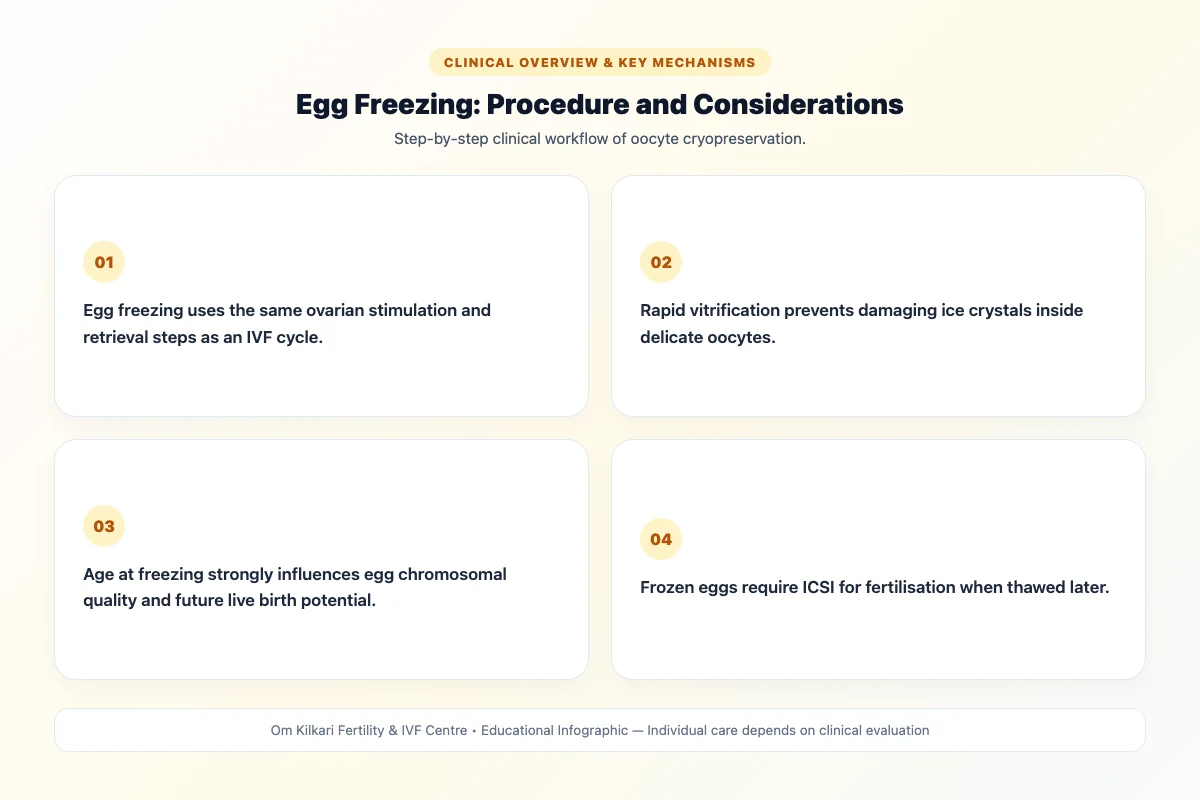
- Egg freezing uses the same ovarian stimulation and retrieval steps as an IVF cycle.
- Rapid vitrification prevents damaging ice crystals inside delicate oocytes.
- Age at freezing strongly influences egg chromosomal quality and future live birth potential.
- Frozen eggs require ICSI for fertilisation when thawed later.
How the Egg Freezing Process Works
After baseline ovarian reserve evaluation (AMH and AFC), 8 to 12 days of ovarian stimulation help mature multiple follicles. Retrieved mature eggs are flash-frozen using ultra-rapid vitrification and stored in liquid nitrogen tanks.
Timing and Realistic Expectations
ASRM guidance notes that outcomes are strongest when eggs are frozen before age 35. Not every frozen egg survives thawing, fertilises, or forms a blastocyst—so specialists counsel openly on expected egg numbers and realistic probabilities.
Your Journey Towards Parenthood Starts with the Right Guidance.
If you have been trying to conceive and would like to understand your fertility health, consult a qualified fertility specialist for personalised guidance.
Frequently Asked Questions
1. Does freezing eggs reduce my remaining natural fertility?+
No. Stimulation rescues follicles that would otherwise naturally undergo atresia (natural loss) in that single menstrual cycle.
2. How long can frozen eggs stay stored?+
Vitrified oocytes remain stable for years in controlled liquid nitrogen storage, subject to Indian ART Act 2021 storage and consent regulations.
Related Articles & Clinic Pages
Written By: Om Kilkari IVF Medical Team • Published: 2026-11-12
Authoritative Clinical References
Disclaimer: This article is for patient awareness and educational purposes only and does not replace personalised medical advice from a qualified fertility specialist.