Key Clinical Summary & Takeaways
Polycystic Ovary Syndrome (PCOS) is a common endocrine condition affecting women of reproductive age, characterised by irregular ovulation, elevated androgen hormones, or polycystic ovarian morphology on ultrasound. While irregular ovulation can delay conception, having PCOS does NOT mean automatic infertility—many women with PCOS conceive naturally or with stepwise lifestyle care and ovulation induction.
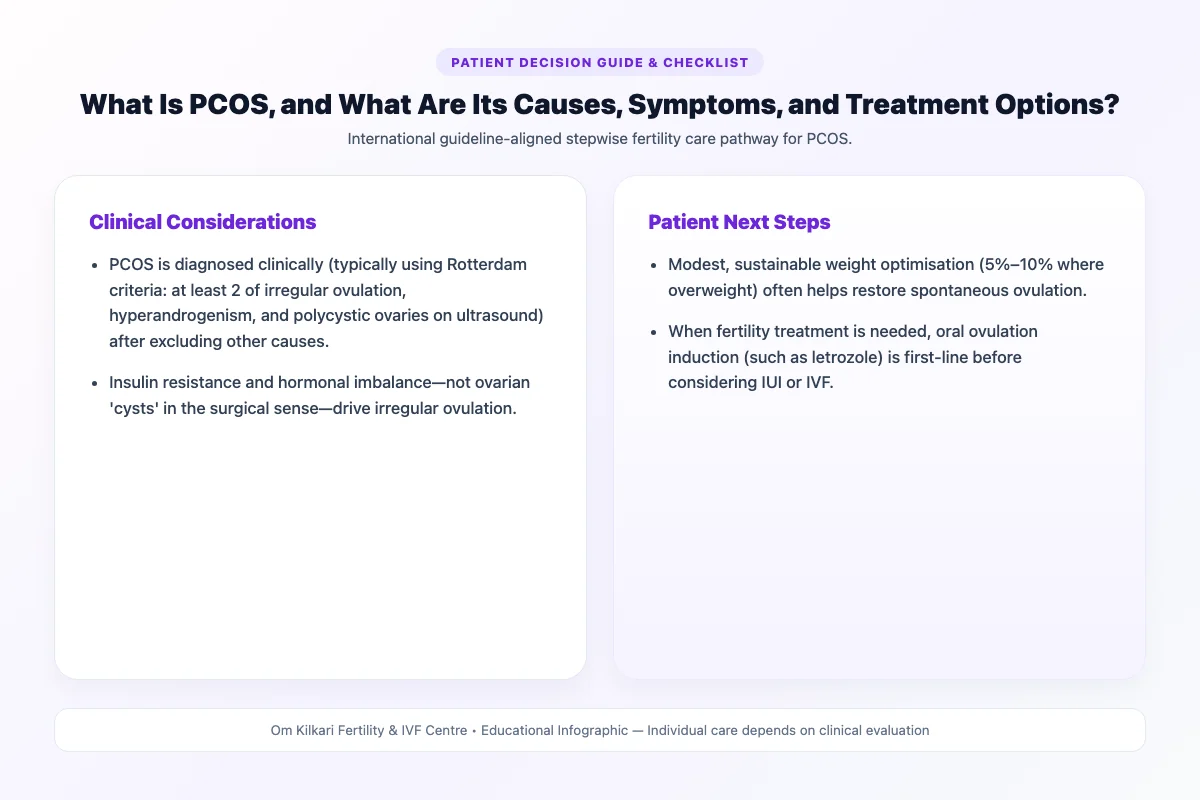
- PCOS is diagnosed clinically (typically using Rotterdam criteria: at least 2 of irregular ovulation, hyperandrogenism, and polycystic ovaries on ultrasound) after excluding other causes.
- Insulin resistance and hormonal imbalance—not ovarian 'cysts' in the surgical sense—drive irregular ovulation.
- Modest, sustainable weight optimisation (5%–10% where overweight) often helps restore spontaneous ovulation.
- When fertility treatment is needed, oral ovulation induction (such as letrozole) is first-line before considering IUI or IVF.
What PCOS Means and Why Hormones Shift
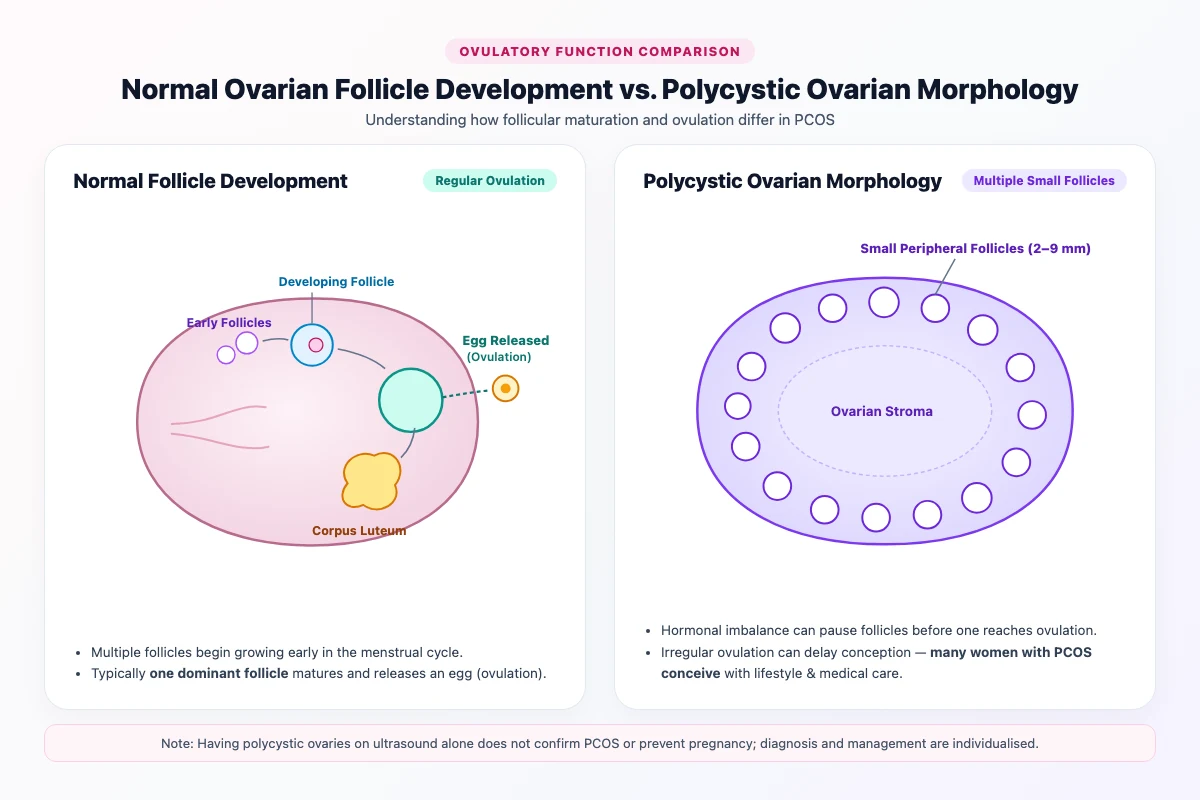
Despite its name, PCOS does not involve harmful ovarian cysts that require surgery. The small fluid-filled sacs seen on ultrasound are immature egg follicles that have paused mid-development due to hormonal signalling imbalances.
Higher levels of luteinising hormone (LH), insulin resistance, and slightly elevated androgens can prevent a single dominant follicle from maturing and releasing an egg regularly each month.
Common Signs, Symptoms, and Metabolic Factors
PCOS presents differently from woman to woman. Some experience noticeable menstrual or skin changes, while others have mild symptoms:
- Irregular, infrequent, or prolonged menstrual cycles (fewer than 8–9 periods a year).
- Acne, oily skin, or excess facial/body hair (hirsutism) linked to higher androgen activity.
- Weight gain around the abdomen or difficulty losing weight due to insulin resistance.
- Darkened, velvety skin patches around the neck or underarms (acanthosis nigricans).
How PCOS Is Diagnosed
International evidence-based PCOS guidelines recommend diagnosing adult PCOS when at least two of three Rotterdam criteria are present—irregular ovulation, clinical or biochemical hyperandrogenism, or polycystic ovarian morphology on pelvic ultrasound—after ruling out thyroid disorders, elevated prolactin, or other hormonal conditions.
Doctors also screen blood glucose, HbA1c, lipid levels, and blood pressure because PCOS carries long-term metabolic considerations beyond fertility alone.
PCOS, Ovulation, and Stepwise Fertility Treatment
Every woman with PCOS is different—many conceive naturally without fertility treatment. When irregular ovulation delays pregnancy, international guidelines recommend a stepwise approach:
- 1. Lifestyle and metabolic care: Balanced whole-food nutrition, regular physical activity, and even 5%–10% weight reduction in overweight women can restart regular ovulation.
- 2. Oral ovulation induction: Medications such as letrozole (often preferred first-line under medical supervision) or clomiphene encourage a single egg to mature, paired with ultrasound follicle tracking.
- 3. Injectable gonadotropins or IUI: Considered selectively if oral medications do not induce ovulation or if mild male factors coexist.
- 4. IVF with gentle stimulation: Reserved for cases with additional tubal/male factors or persistent non-response, carefully dosed to minimise ovarian hyperstimulation risk.
Your Journey Towards Parenthood Starts with the Right Guidance.
If you have been trying to conceive and would like to understand your fertility health, consult a qualified fertility specialist for personalised guidance.
Frequently Asked Questions
1. Does having PCOS mean I will definitely need IVF?+
No. Most women with PCOS do not require IVF—many conceive naturally or with lifestyle optimisation and oral ovulation-induction tablets.
2. If an ultrasound shows polycystic ovaries, do I definitely have PCOS?+
Not necessarily. Up to 20%–30% of healthy young women can show multi-follicular ovaries on ultrasound without hormonal or ovulatory symptoms.
3. Can thin women also have PCOS?+
Yes. While insulin resistance is common, 'lean PCOS' affects women of normal body weight too and is managed through tailored nutrition, metabolic checks, and ovulation support.
4. What should women with PCOS check before planning pregnancy?+
Preconception screening typically includes blood sugar/HbA1c, thyroid function, blood pressure, vitamin D, and starting daily folic acid.
5. Does PCOS go away after pregnancy?+
PCOS is a long-term metabolic and hormonal tendency. Cycles may feel more regular at times, so maintaining healthy nutrition and periodic metabolic screening remains beneficial after delivery.
Related Articles & Clinic Pages
Written By: Om Kilkari IVF Medical Team • Published: 2026-11-12
Authoritative Clinical References
Disclaimer: This article is for patient awareness and educational purposes only and does not replace personalised medical advice from a qualified fertility specialist.