
Key Clinical Summary & Takeaways
Balanced preconception nutrition and healthy daily habits support ovulatory regularity, sperm quality, and early pregnancy health—though diet alone cannot cure structural causes such as blocked fallopian tubes. WHO and ACOG recommend starting folic acid before conception, eating nutrient-dense whole foods, maintaining a healthy BMI, staying physically active, and avoiding tobacco and alcohol.
- Both partners benefit from preconception nutrition—sperm maturation takes roughly 70 to 90 days.
- WHO and ACOG recommend 400 mcg of daily folic acid before conception to help prevent neural tube defects.
- Everyday Indian staples—lentils, green leafy vegetables, millets, nuts, dairy or fortified foods—build balanced meals.
- Nutrition supports medical fertility care; it does not replace clinical diagnosis when conception is delayed.
Building a Balanced Preconception Plate With Indian Foods
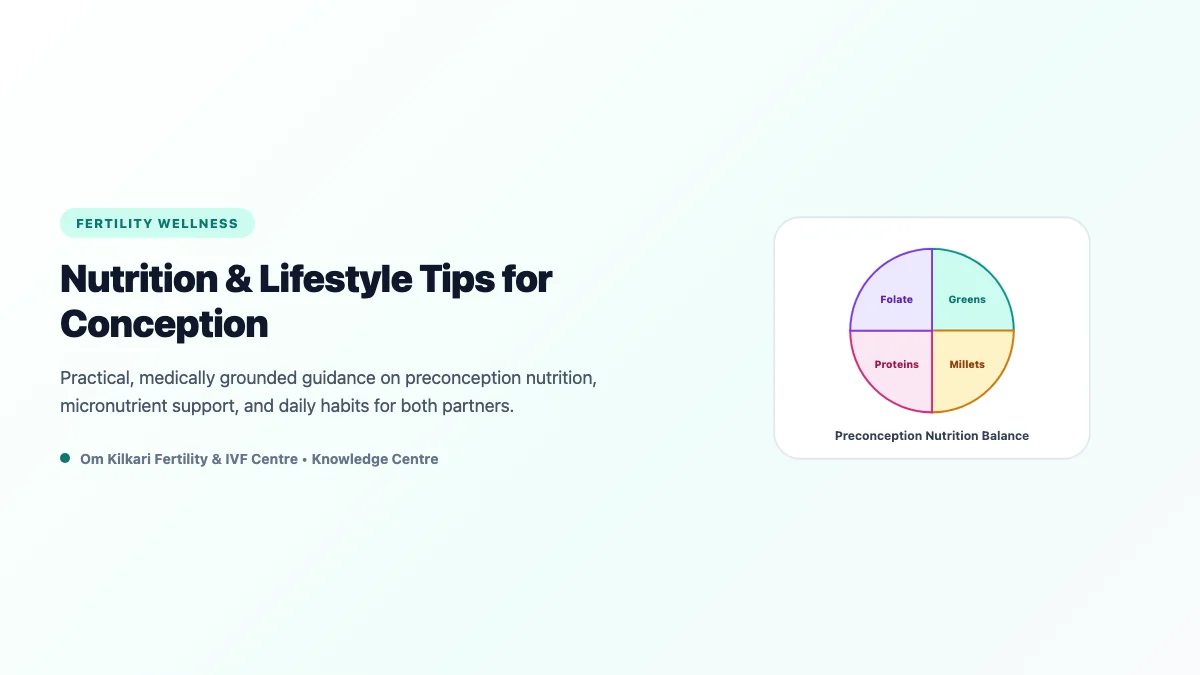
Rather than following restrictive fad diets or unproven 'miracle fertility foods', reproductive nutrition focuses on steady blood sugar, adequate protein, healthy fats, and essential micronutrients.
Traditional Indian home cooking easily provides these nutrients when balanced across food groups: whole grains and millets (roti, brown rice, jowar, bajra, ragi), plant and dairy proteins (moong, masoor, chana, paneer, curd, or eggs and lean fish if non-vegetarian), colourful seasonal vegetables, and nuts or seeds.
- Complex carbohydrates and fibre help steady insulin levels, especially helpful in PCOS.
- Healthy unsaturated fats from walnuts, almonds, flaxseeds, and mustard or groundnut oil support hormone synthesis.
- Minimise ultra-processed snacks, sugary drinks, and trans fats that worsen metabolic inflammation.
Folic Acid, Iron, Vitamin D, and Essential Micronutrients
Global obstetric guidelines from WHO and ACOG advise women planning pregnancy to begin folic acid supplementation (commonly 400 micrograms daily, or a higher dose if advised by a physician for specific medical histories) at least one to three months before conception to reduce the risk of neural tube defects.
Adequate iron stores, vitamin B12 (especially important in vegetarian diets), vitamin D, iodine, and zinc also play important roles in cellular division, ovulation, and sperm development. Blood tests during a preconception check-up help identify genuine deficiencies rather than guessing with high-dose supplements.
Weight Balance, Physical Activity, and Sleep
Being significantly underweight or having obesity can disrupt the hypothalamic-pituitary-ovarian signals that regulate ovulation in women and lower testosterone and sperm parameters in men.
Moderate, consistent movement—such as brisk walking 30 minutes a day, yoga, or light strength training—improves insulin sensitivity and lowers stress without overtraining. Aiming for 7 to 8 hours of regular sleep also supports hormonal rhythm.
Avoiding Tobacco, Alcohol, and Environmental Exposures
Smoking, gutkha/chewing tobacco, and passive smoke accelerate egg loss in women and damage sperm DNA and motility in men. Alcohol consumption can interfere with fertility and early fetal development, so avoiding alcohol when trying to conceive is the safest medical choice.
Men should also avoid prolonged scrotal heat exposure (such as frequent hot baths or resting warm laptops directly on the lap) and minimise workplace exposure to pesticides or heavy solvents.
Knowing When Medical Evaluation Is Needed
Healthy habits create the best foundation for conception, yet conditions like blocked fallopian tubes, severe endometriosis, low ovarian reserve, or low sperm count require targeted medical care. If pregnancy has not occurred after 12 months (or 6 months if the woman is 35 or older), consult a fertility specialist alongside your wellness routine.
Your Journey Towards Parenthood Starts with the Right Guidance.
If you have been trying to conceive and would like to understand your fertility health, consult a qualified fertility specialist for personalised guidance.
Frequently Asked Questions
1. Can a fertility diet cure blocked fallopian tubes or azoospermia?+
No. While nutrition supports hormone balance and overall gamete health, structural blockages or severe sperm production issues require proper medical diagnosis and fertility treatment.
2. Should men also take folic acid or change their diet before trying?+
Yes. Balanced intake of zinc, folate, antioxidants from fruits and vegetables, and avoiding smoking and alcohol support healthy sperm production over a 2 to 3 month cycle.
3. Is caffeine completely forbidden when trying to conceive?+
Major guidelines generally consider moderate caffeine intake (such as up to 200 mg per day, roughly one small cup of coffee or two mild cups of tea) acceptable, though high intake should be reduced.
4. Are herbal 'fertility boosters' safe to take without a doctor's advice?+
Unregulated herbal mixtures can interact with fertility medications or hormones. Always discuss any supplements or traditional remedies with your doctor.
5. How early before IVF or natural conception should lifestyle changes start?+
Starting 3 months in advance is ideal because both egg maturation and sperm production cycles span roughly 70 to 90 days.
Related Articles & Clinic Pages
Written By: Om Kilkari IVF Medical Team • Published: 2026-11-12
Authoritative Clinical References
Disclaimer: This article is for patient awareness and educational purposes only and does not replace personalised medical advice from a qualified fertility specialist.