
Key Clinical Summary & Takeaways
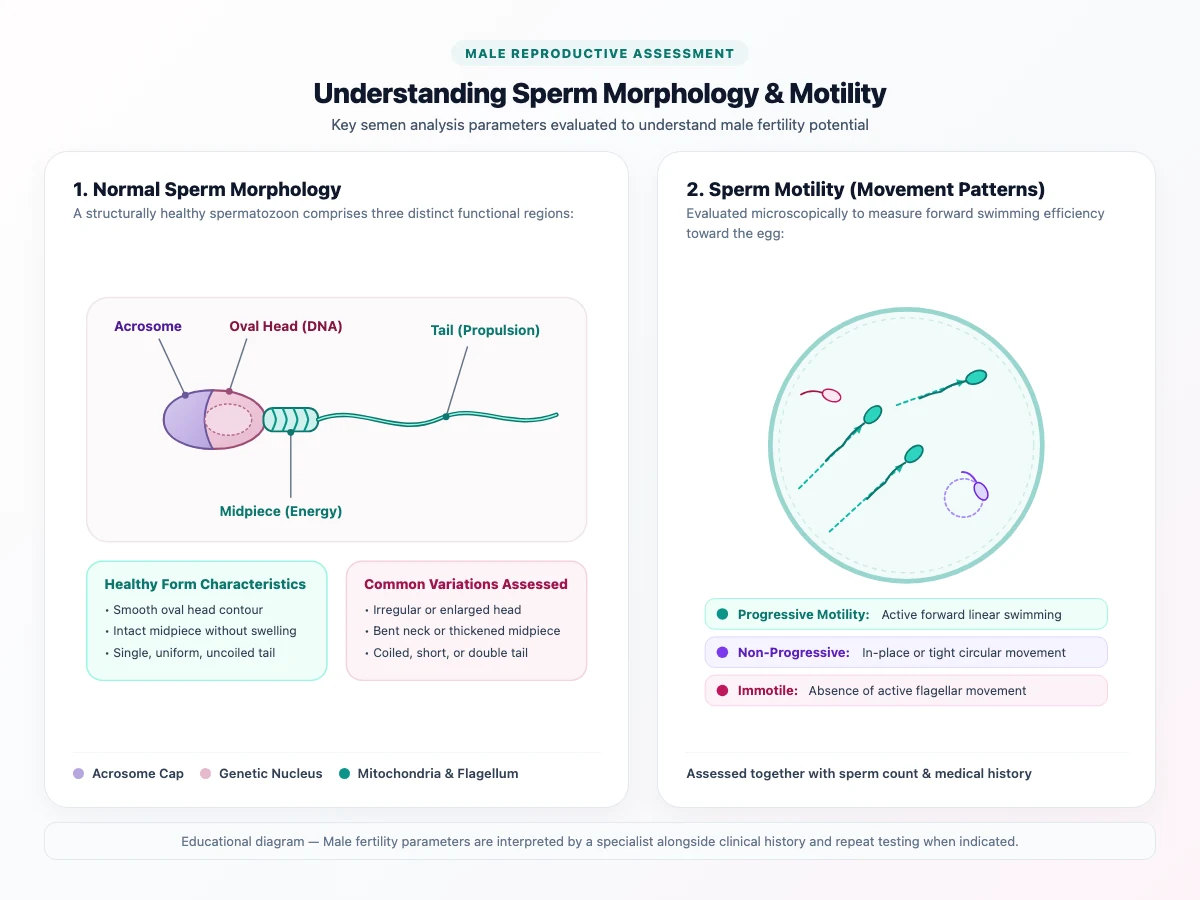
Male factors contribute to roughly half of all couple infertility cases, either alone or alongside female factors. Evaluation begins with a medical history and standardised semen analysis measuring volume, concentration, motility, and morphology, followed by targeted hormonal or urological assessment when abnormalities appear.
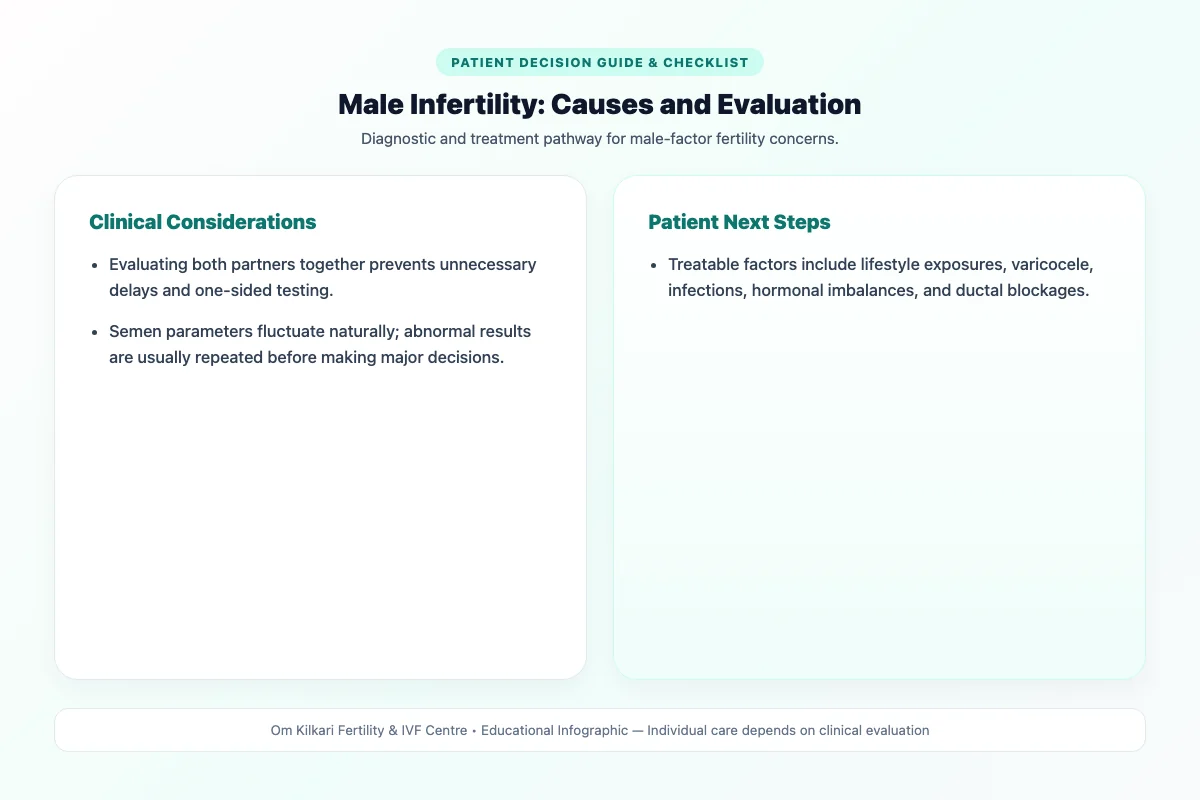
- Evaluating both partners together prevents unnecessary delays and one-sided testing.
- Semen parameters fluctuate naturally; abnormal results are usually repeated before making major decisions.
- Treatable factors include lifestyle exposures, varicocele, infections, hormonal imbalances, and ductal blockages.
Common Causes of Male Fertility Difficulties
Male fertility depends on normal sperm production in the testes, unobstructed transport through the reproductive tract, and healthy endocrine signalling from the pituitary gland.
- Impaired sperm parameters: low count (oligozoospermia), low forward movement (asthenozoospermia), or abnormal shape (teratozoospermia).
- Varicocele (dilated scrotal veins raising local testicular temperature).
- Reproductive tract blockages or absence of sperm in the ejaculate (azoospermia).
- Hormonal deficiencies, prior infections, undescended testes, or genetic factors.
- Smoking, chewing tobacco, alcohol, obesity, and heat or chemical exposures.
Understanding Semen Analysis and Next Steps
Collected after 2 to 5 days of abstinence, a semen analysis is interpreted against WHO laboratory reference distributions. Depending on findings, management ranges from lifestyle optimisation and targeted medical therapy to IUI, IVF, or ICSI with surgical sperm retrieval when needed.
Your Journey Towards Parenthood Starts with the Right Guidance.
If you have been trying to conceive and would like to understand your fertility health, consult a qualified fertility specialist for personalised guidance.
Frequently Asked Questions
1. If one semen analysis is low, does it always mean ICSI is needed?+
Not always. Fever, stress, or short abstinence can temporarily lower counts, so specialists typically repeat the test 4 to 8 weeks later alongside clinical assessment.
2. How long does it take for lifestyle improvements to reflect in sperm tests?+
Because a full sperm maturation cycle takes roughly 70 to 90 days, benefits from quitting tobacco or improving health are evaluated after about 3 months.
Related Articles & Clinic Pages
Written By: Om Kilkari IVF Medical Team • Published: 2026-11-12
Authoritative Clinical References
Disclaimer: This article is for patient awareness and educational purposes only and does not replace personalised medical advice from a qualified fertility specialist.