

At a Glance: Key Fertility Facts
- What infertility means: A medical condition defined by the inability to achieve pregnancy after 12 months or more of regular, unprotected sexual intercourse.
- Global prevalence: According to the World Health Organization (WHO), approximately one in six people of reproductive age experiences infertility during their lifetime worldwide.
- Shared responsibility: Infertility can affect women, men, or both partners — both partners should be evaluated together.
- When to consult: After 12 months if the woman is under 35 years, after 6 months if 35 years or above, and earlier if over 40 or with known symptoms.
- Treatment options: Care is individualised and may include lifestyle and medical management, ovulation induction, IUI, IVF, ICSI, or fertility preservation — IVF is not required for every couple.
For many couples in India, starting a family is one of life's most beautiful dreams. It is a journey filled with excitement, hope, family expectations and countless little moments of anticipation.
But sometimes, the journey towards parenthood takes longer than expected.
Months pass, pregnancy tests remain negative, and questions begin to arise. Is something wrong? Are we doing something incorrectly? Should we consult a doctor? Will we ever be able to become parents?
These questions can be emotionally exhausting, especially in a society where conversations about pregnancy and children are often part of everyday family life.
The truth is that fertility problems are more common than many people realise, and they are not something couples should feel ashamed of.
With advancements in reproductive medicine, better diagnosis and appropriate treatment, many couples experiencing fertility challenges have several options available to help them move closer to parenthood.
Let's understand what fertility problems really mean, why they occur, when to seek medical advice and what treatment options are available in India.
Understanding Infertility: When Should You Be Concerned?
Infertility is a medical condition in which a person or couple is unable to achieve pregnancy after 12 months or more of regular, unprotected sexual intercourse.
According to the World Health Organization (WHO), approximately one in every six people of reproductive age experiences infertility during their lifetime worldwide.
Infertility can affect women, men or both partners. In some cases, doctors may not identify a specific cause even after detailed investigations. This is known as unexplained infertility.
There are two commonly recognised forms:
1. Primary Infertility
When a couple has never achieved a pregnancy despite trying to conceive.
2. Secondary Infertility
When a couple has experienced pregnancy previously but is facing difficulty conceiving again.
An important point to remember is that having a child previously does not necessarily mean that future pregnancies will happen without difficulty. Fertility can change with age, health conditions and other factors.
Fertility Challenges in India: A Growing Health Concern
In India, fertility is often discussed privately, and many couples hesitate to seek medical advice because of social pressure, family expectations or fear of judgement.
Research using Indian population data has highlighted infertility as an important reproductive health concern. However, reported estimates vary considerably depending on the age group, population studied and the definition used.
A 2023 analysis using NFHS-5 data examined primary infertility among nearly 4.9 lakh currently married women. It reported approximately 18.7 cases per 1,000 women among those who had been married for at least five years and were currently in a union.
A subsequent systematic review of Indian studies also highlighted the need for better awareness, early identification and accessible fertility care.
These findings remind us that infertility deserves attention as an important healthcare issue rather than being treated as a personal or family failure.
What Causes Fertility Problems?
There is no single reason why a couple may experience difficulty conceiving. Fertility depends on several biological processes working together.
Let's look at some of the common causes.
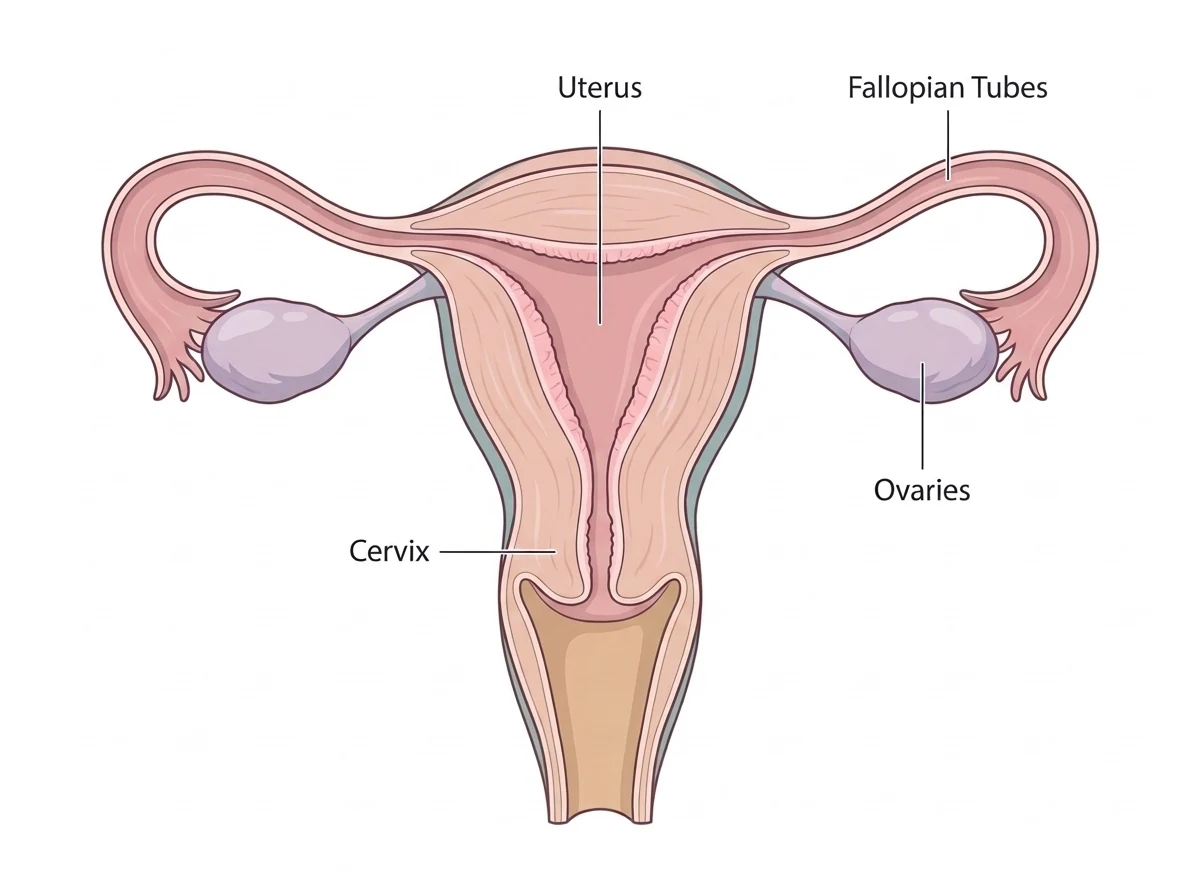
1. Age and Declining Fertility
Age is an important factor, particularly for women.
Women are born with a limited number of eggs, and both egg quantity and quality generally decline with increasing age.
The decline becomes more significant during the mid-to-late thirties and continues as women approach their forties.
Age can also affect male fertility, although the pattern of decline is different.
This is why couples planning pregnancy later in life should consider discussing their reproductive health with a fertility specialist rather than unnecessarily delaying an evaluation.
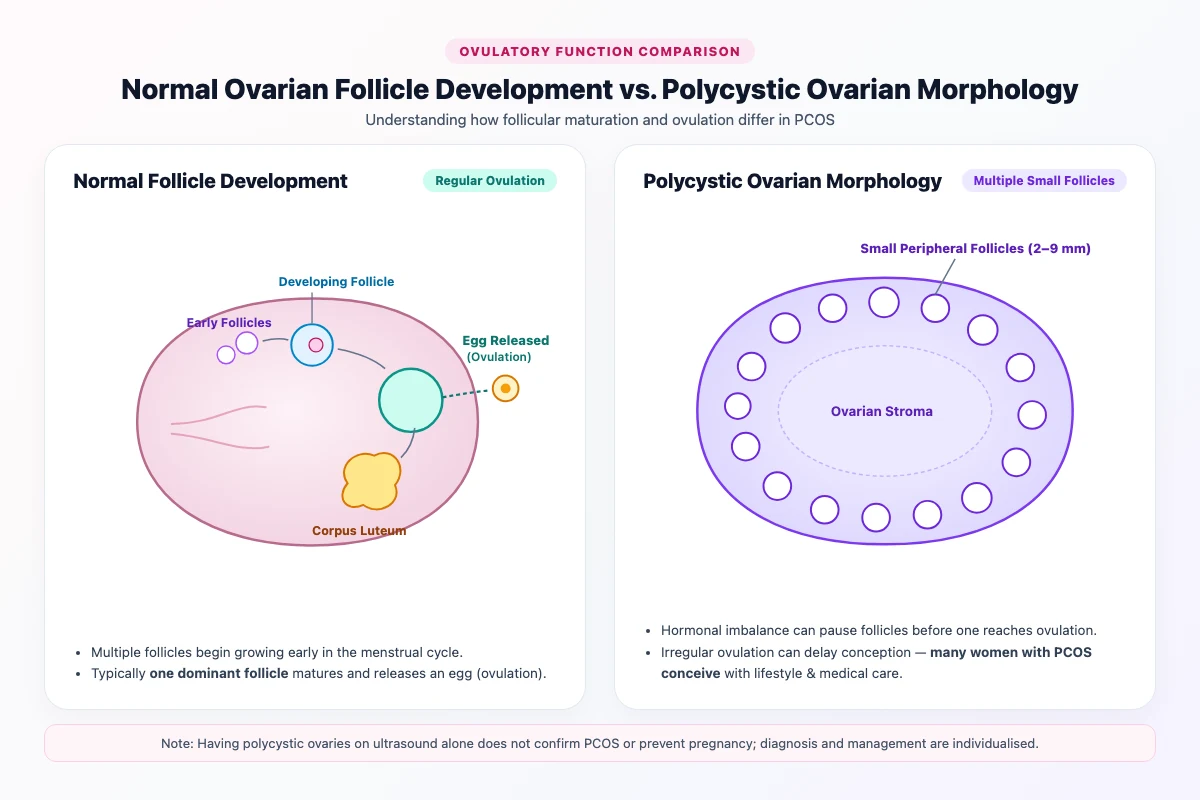
2. Polycystic Ovary Syndrome (PCOS)
PCOS is one of the common hormonal conditions affecting women of reproductive age.
Women with PCOS may experience:
- Irregular or missed menstrual periods.
- Difficulty with regular ovulation.
- Acne and excessive facial or body hair.
- Weight-related or metabolic difficulties.
Because ovulation may not occur regularly, conceiving can become difficult.
The encouraging part is that many women with PCOS can conceive with appropriate medical management, ovulation treatment or assisted reproductive techniques when required.
3. Blocked Fallopian Tubes
Fallopian tubes play an essential role in natural conception.
They help the egg and sperm meet, allowing fertilisation to take place.
If one or both tubes become blocked or damaged, this process may be affected.
Possible causes include:
- Previous pelvic infections.
- Untreated sexually transmitted infections.
- Endometriosis.
- Previous abdominal or pelvic surgeries.
Depending on the severity and location of the blockage, treatment may involve surgery or IVF.
4. Endometriosis and Uterine Problems
Endometriosis is a condition in which tissue similar to the lining of the uterus grows outside it.
It may cause painful periods, pelvic pain and difficulties with conception.
Certain uterine conditions, including fibroids, polyps and adhesions, can also affect fertility, depending on their location and size.
Early evaluation can help doctors identify whether these conditions are contributing to pregnancy difficulties.
5. Male Infertility: An Often Overlooked Factor
One of the biggest misconceptions surrounding infertility in India is that the woman is always responsible when a couple cannot conceive.
This is medically incorrect.
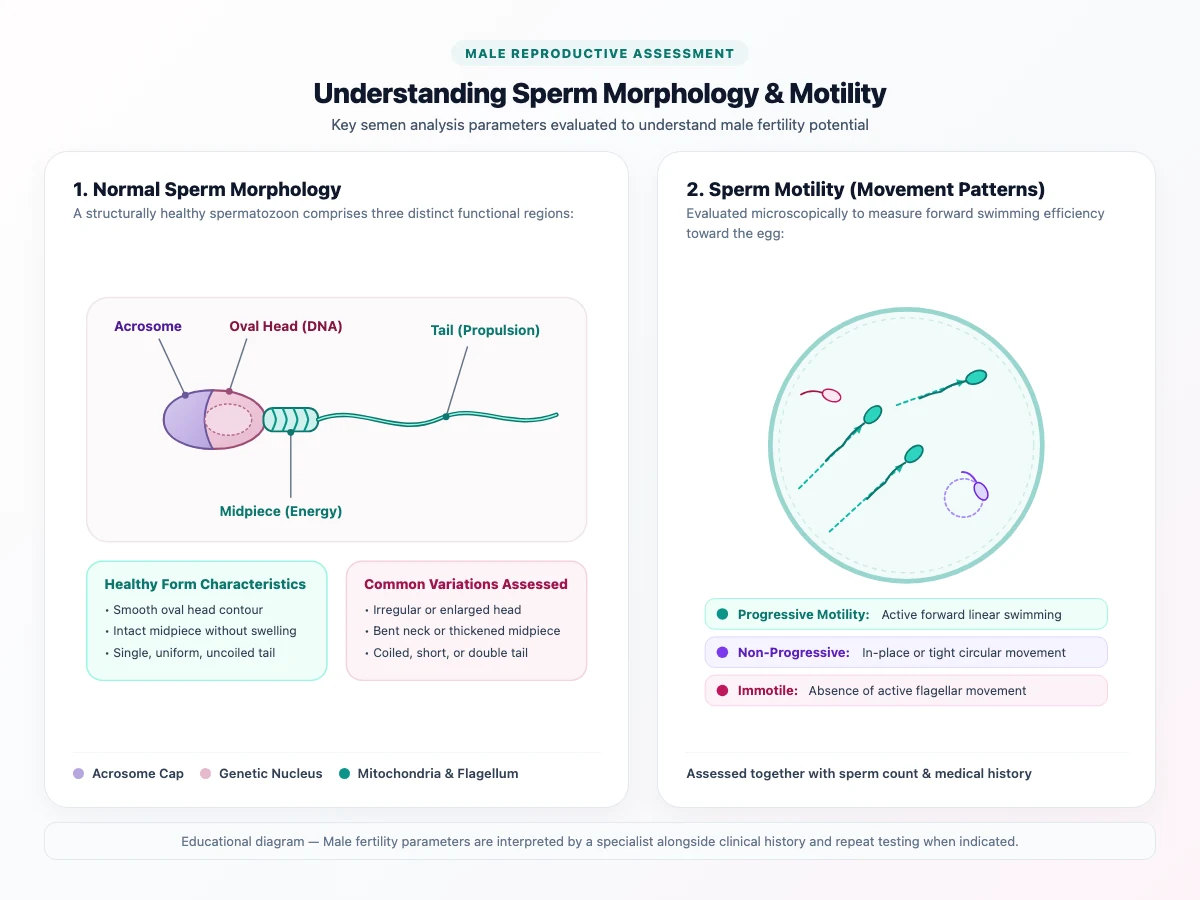
Male fertility problems can be associated with:
- Low sperm count.
- Poor sperm movement (motility).
- Abnormal sperm shape (morphology).
- Varicocele.
- Hormonal imbalances.
- Blockages in the reproductive tract.
- Certain infections or previous medical treatments.
Smoking, excessive alcohol consumption, obesity and certain environmental exposures may also affect sperm health.
A semen analysis is one of the important initial investigations used to assess male fertility.
Both partners should be evaluated together. This saves time, avoids unnecessary investigations and helps doctors identify the most appropriate treatment.
6. Lifestyle, Stress and General Health
Modern lifestyles can also influence reproductive health.
Some factors associated with fertility difficulties include:
- Smoking and tobacco consumption.
- Excessive alcohol intake.
- Obesity or significant weight fluctuations.
- Poor nutritional habits.
- Lack of physical activity.
- Certain hormonal and metabolic conditions.
- Chronic exposure to environmental pollutants.
Stress can also affect emotional well-being, relationships and sexual health. However, couples should not be told that stress alone is the reason they are unable to conceive.
Infertility is a medical issue and deserves proper medical evaluation.
When Should You Consult a Fertility Specialist?
Many couples wait for several years before seeking professional help. While patience is important, delaying medical evaluation unnecessarily may reduce the available treatment options, particularly when age is a factor.
As a general clinical guideline:
- Women below 35 years: Consider a fertility evaluation if pregnancy has not occurred after 12 months of regular, unprotected intercourse.
- Women aged 35 years and above: Seek an evaluation after six months of trying.
- Women above 40 years: An earlier evaluation is generally advisable.
You should also consult a specialist sooner if you experience:
- Irregular or absent menstrual periods.
- Repeated miscarriages.
- Severe menstrual or pelvic pain.
- A history of PCOS or endometriosis.
- Previous pelvic infections or reproductive surgery.
- Known male fertility problems.
- Previous chemotherapy or radiation treatment.
How Are Fertility Problems Diagnosed?
A proper fertility evaluation begins with understanding the medical history of both partners.
Your doctor may recommend different investigations depending on your age, symptoms and previous medical history.
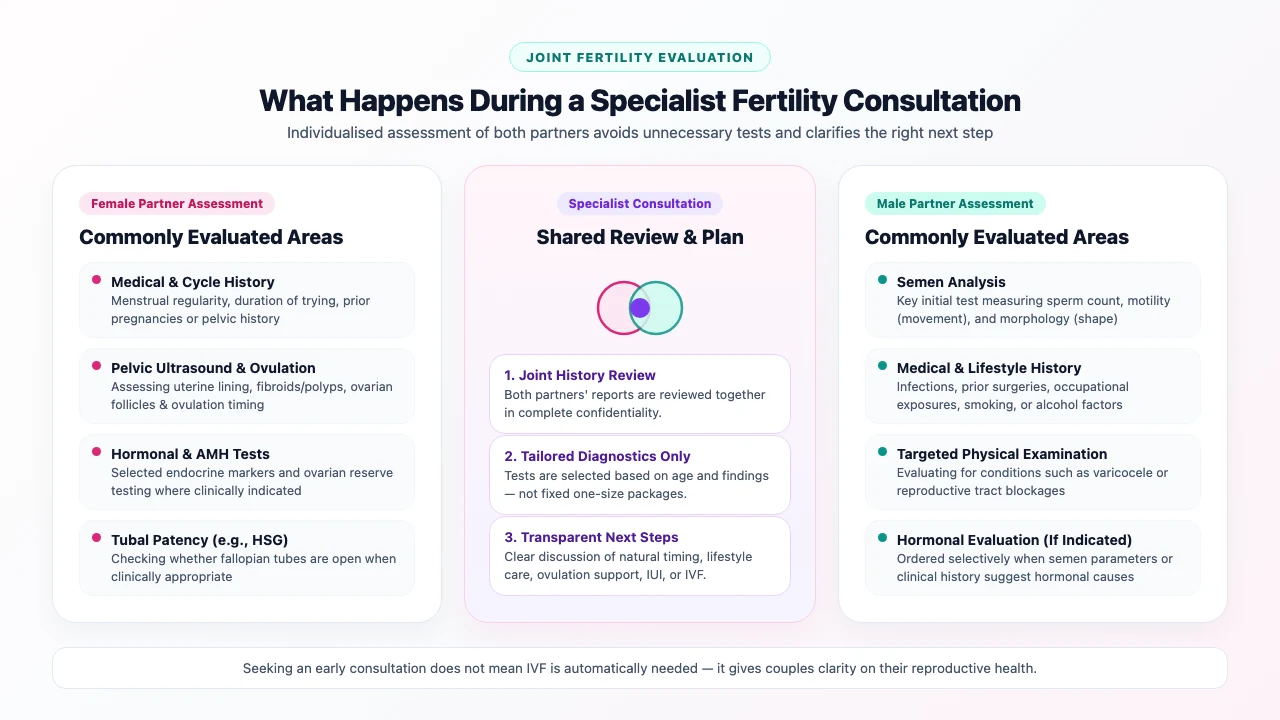
Common investigations include:
For Women
- Pelvic ultrasound to assess the uterus and ovaries.
- Hormonal tests, where clinically indicated.
- AMH testing to help assess ovarian reserve.
- Evaluation of ovulation.
- HSG or other appropriate investigations to assess fallopian tube patency.
- Additional uterine investigations when required.
For Men
- Semen analysis.
- Hormonal investigations, if indicated.
- Physical examination by an appropriate specialist.
- Further investigations depending on the semen report and medical history.
Not every patient requires every test. A good fertility specialist recommends investigations based on individual medical needs rather than following the same testing package for everyone.
What Are the Available Fertility Treatment Options in India?
Fertility treatment has advanced significantly over the years. Today, couples may have several infertility treatment options depending on the underlying cause.
The treatment plan should always be individualised.
1. Lifestyle and Medical Management
In some cases, improving general health, managing weight, treating hormonal conditions and addressing underlying medical problems may improve the chances of conception.
Doctors may also recommend medications to help regulate ovulation.
2. Ovulation Induction
Women who are not ovulating regularly may benefit from medically supervised ovulation induction.
The objective is to help the ovaries release an egg and improve the chances of natural conception.
3. Intrauterine Insemination (IUI)
IUI is a fertility treatment in which specially prepared sperm is placed directly into the uterus around the time of ovulation.
It may be recommended in selected cases, depending on sperm parameters, tubal health and other fertility factors.
4. In Vitro Fertilisation (IVF)
IVF is one of the most recognised assisted reproductive technologies.
In simple terms, IVF involves fertilising an egg with sperm in a specialised laboratory and transferring a suitable embryo into the uterus.
The process generally includes:
- Ovarian stimulation to encourage the development of multiple eggs.
- Monitoring follicle development.
- Egg retrieval.
- Fertilisation with sperm in the laboratory.
- Embryo development and assessment.
- Embryo transfer into the uterus, when appropriate.
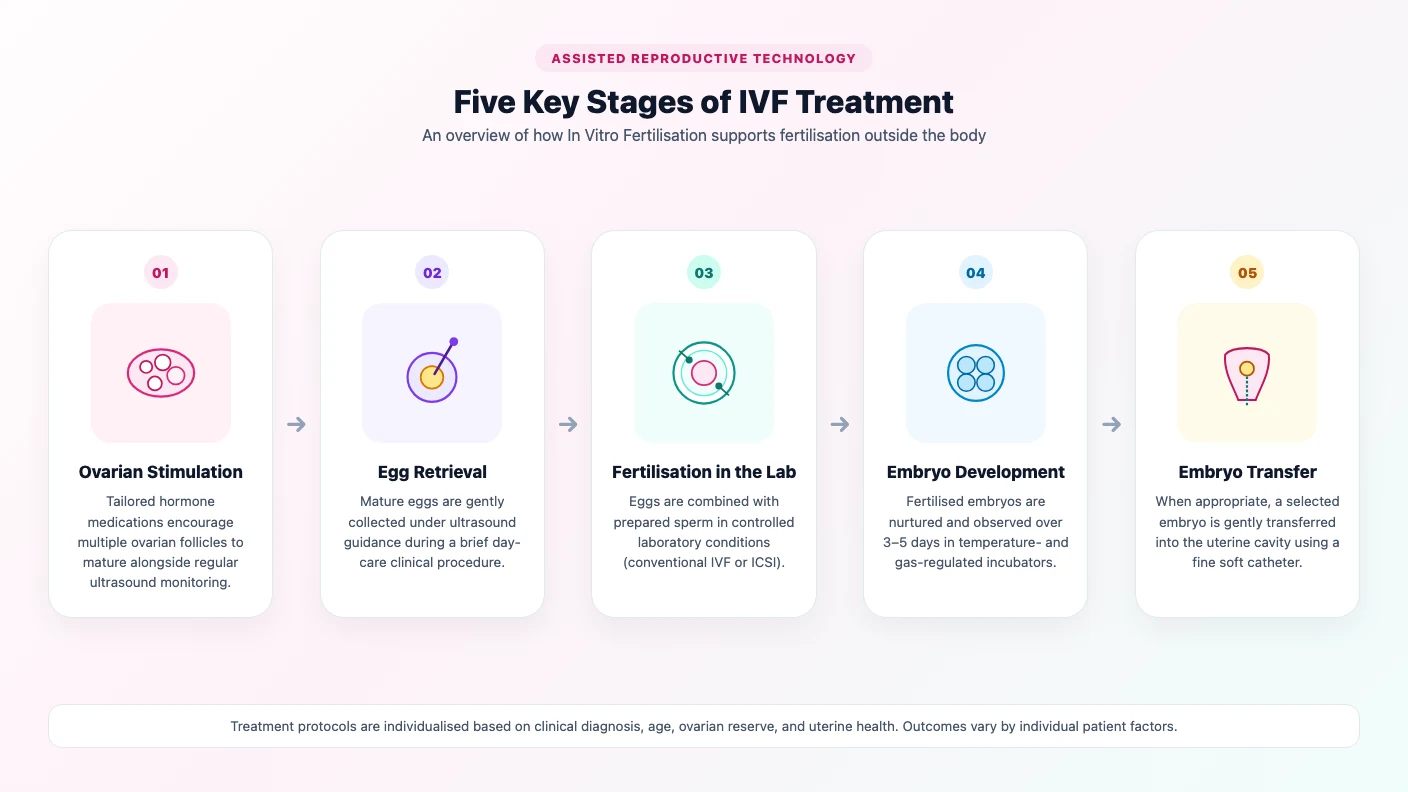
Five Stages of IVF Treatment
IVF may be recommended in cases involving blocked fallopian tubes, certain male fertility problems, age-related fertility difficulties, some cases of endometriosis or unexplained infertility after appropriate evaluation.
However, IVF is not necessary for every couple experiencing difficulty conceiving.
5. ICSI – Intracytoplasmic Sperm Injection
ICSI is an advanced laboratory technique often used in selected cases of male-factor infertility.
In this procedure, a single sperm is injected directly into an egg to assist fertilisation.
The decision to use ICSI depends on the clinical circumstances and laboratory assessment.
6. Fertility Preservation
Some individuals may wish to preserve their reproductive options for future years.
Egg freezing, sperm freezing and embryo freezing may be considered in appropriate medical or personal circumstances.
These options should be discussed with a fertility specialist, particularly before treatments that may affect reproductive health.
Does IVF Guarantee Pregnancy?
This is one of the most important questions couples ask.
The honest answer is no.
IVF has helped many couples achieve pregnancy, but it cannot guarantee success in every case.
The outcome may depend on several factors, including:
- Age of the woman.
- Egg and sperm quality.
- Embryo development.
- Uterine health.
- Underlying medical conditions.
- Previous fertility treatment history.
A responsible fertility specialist should explain the expected chances of success, possible risks, costs and alternatives before treatment begins.
The Emotional Side of Infertility: You Are Not Alone
While medical investigations and treatments are important, we should never overlook the emotional journey of couples experiencing infertility.
The repeated disappointment of negative pregnancy tests, questions from relatives, social comparisons and uncertainty about the future can become overwhelming.
Sometimes, even well-intentioned comments from family members can hurt.
A few things every couple should remember:
- Infertility is not anyone's fault.
- Neither partner should be blamed.
- Seeking medical help is a positive step, not a reason for embarrassment.
- Not every couple requires advanced fertility treatment.
- Emotional support and open communication are important throughout the journey.
Partners should try to support each other rather than allowing the pressure of conception to affect their relationship.
If the emotional burden becomes difficult to manage, counselling or mental health support can be helpful.
Choosing the Right IVF and Fertility Centre in India
Choosing a fertility centre is an important decision. Couples should look beyond advertisements and promotional claims.
Before selecting a centre, consider:
- Qualified Specialists: Check the qualifications and experience of the fertility and reproductive medicine team.
- Proper Diagnosis: The centre should investigate both partners before recommending a treatment plan.
- Laboratory Standards: IVF laboratory infrastructure, quality control and embryology expertise are important.
- Transparent Communication: Treatment options, expected outcomes, costs and potential risks should be explained clearly.
- Individualised Treatment: Every couple has different medical requirements. Avoid centres that recommend identical treatment plans to everyone.
- Ethical Practices: Ensure that the clinic follows applicable Indian regulations and maintains appropriate patient consent and confidentiality.
In India, assisted reproductive technology clinics and banks are regulated under the Assisted Reproductive Technology (Regulation) Act, 2021. Couples should consider the regulatory compliance and registration status of the facility they choose.
Final Thoughts: Parenthood Begins with Understanding
The journey towards parenthood may not always happen according to the timeline we imagine.
For some couples, conception happens naturally. For others, it may require medical guidance, patience and the support of fertility specialists.
What matters is understanding the reason behind the difficulty and taking the right steps at the right time.
There is no shame in asking questions, undergoing investigations or exploring fertility treatments.
If you and your partner have been trying to conceive without success, do not allow uncertainty, social pressure or fear to stop you from seeking professional advice.
Every fertility journey is different. The first step is understanding yours.
Take the First Step Towards Parenthood
At Omkilkari IVF, we believe that every couple deserves compassionate guidance, clear medical information and an individualised approach to fertility care.
If you are experiencing difficulty conceiving or simply want to understand your fertility health better, consider consulting a qualified fertility specialist.
A conversation today could help you understand the next step in your journey towards parenthood.
Omkilkari IVF – Compassionate Care. Informed Choices. Hope for Parenthood.
Your Journey Towards Parenthood Starts with the Right Guidance.
If you have been trying to conceive and would like to understand your fertility health, consult a qualified fertility specialist for personalised guidance.
Frequently Asked Questions (FAQs)
1. How long should a couple try naturally before consulting an IVF specialist? +
Women below 35 years are generally advised to seek evaluation after 12 months of trying. Women aged 35 years or above should consider evaluation after six months. Earlier consultation is advisable for women above 40 or anyone with known fertility-related medical conditions.
2. Can infertility affect men as well as women? +
Yes. Infertility can result from male factors, female factors, a combination of both or unexplained causes. Both partners should undergo appropriate evaluation.
3. Is PCOS a reason for infertility? +
PCOS can interfere with regular ovulation and make conception difficult. However, many women with PCOS can conceive with appropriate medical management.
4. Can women with blocked fallopian tubes become pregnant? +
Yes, depending on the extent and location of the blockage. IVF may be an option because it allows fertilisation to take place outside the fallopian tubes.
5. Is IVF the only solution for infertility? +
No. Treatment may include lifestyle management, medication, ovulation induction, IUI, surgery in selected cases or IVF. The right approach depends on the diagnosis.
6. Does age affect IVF success? +
Yes. Female age, particularly egg quality and quantity, is an important factor influencing IVF outcomes. Individual chances should be discussed with a fertility specialist.
7. Can infertility be treated completely? +
Many causes of infertility can be treated or managed, but outcomes depend on the underlying condition and individual circumstances. Some couples may need assisted reproductive techniques to achieve pregnancy.
8. Is infertility something couples should feel embarrassed about? +
Absolutely not. Infertility is a recognised medical condition. It is not a personal failure, and neither partner should be blamed.
Explore Related Clinic Pages
Written By
Om Kilkari IVF Medical Team
Clinical Fertility & Patient Education Desk
Clinic Information
Om Kilkari Fertility & IVF Centre
SA 6/186 2B-1A, Sri Nagar Colony, Paharia, Varanasi, UP 221007
Clinical & Regulatory References
- World Health Organization (WHO) — Infertility Fact Sheet (Global 1-in-6 Lifetime Prevalence)
- World Health Organization (WHO) — Guideline for the Prevention, Diagnosis and Treatment of Infertility (NCBI NBK620412)
- Agiwal V, Madhuri RS, Chaudhuri S (2023) — Infertility Burden Across Indian States: Insights from NFHS-5 (2019–21), PMC10757690
- Government of India — The Assisted Reproductive Technology (Regulation) Act, 2021 (India Code)
Disclaimer: This article is intended for general health awareness and educational purposes only. It does not replace professional medical advice, diagnosis or treatment. Fertility investigations and treatment options should be decided in consultation with a qualified medical specialist.