
Key Clinical Summary & Takeaways
IUI (Intrauterine Insemination) is a simpler, lower-intervention fertility treatment where washed sperm are placed directly into the uterus around ovulation, requiring at least one open fallopian tube and adequate motile sperm. IVF fertilises eggs outside the body in a laboratory and is preferred for blocked tubes, severe male-factor infertility, advanced maternal age, or repeated unsuccessful IUI cycles.
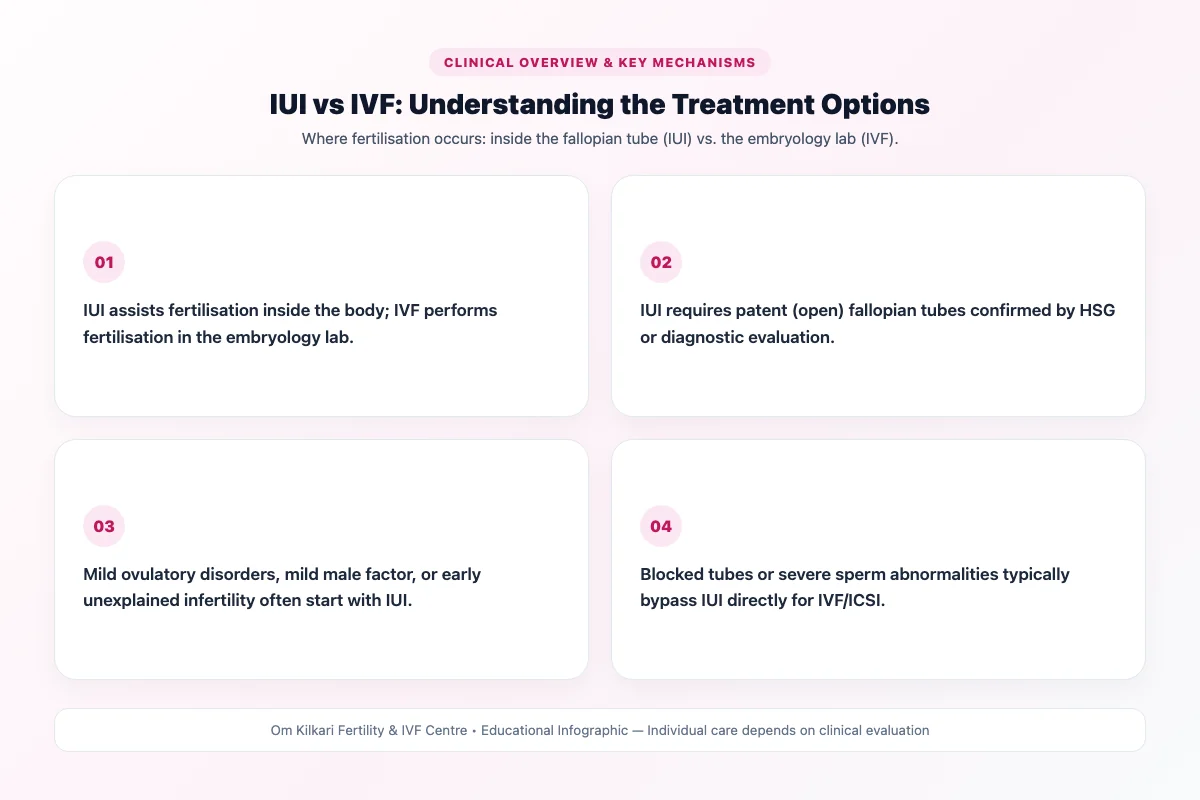
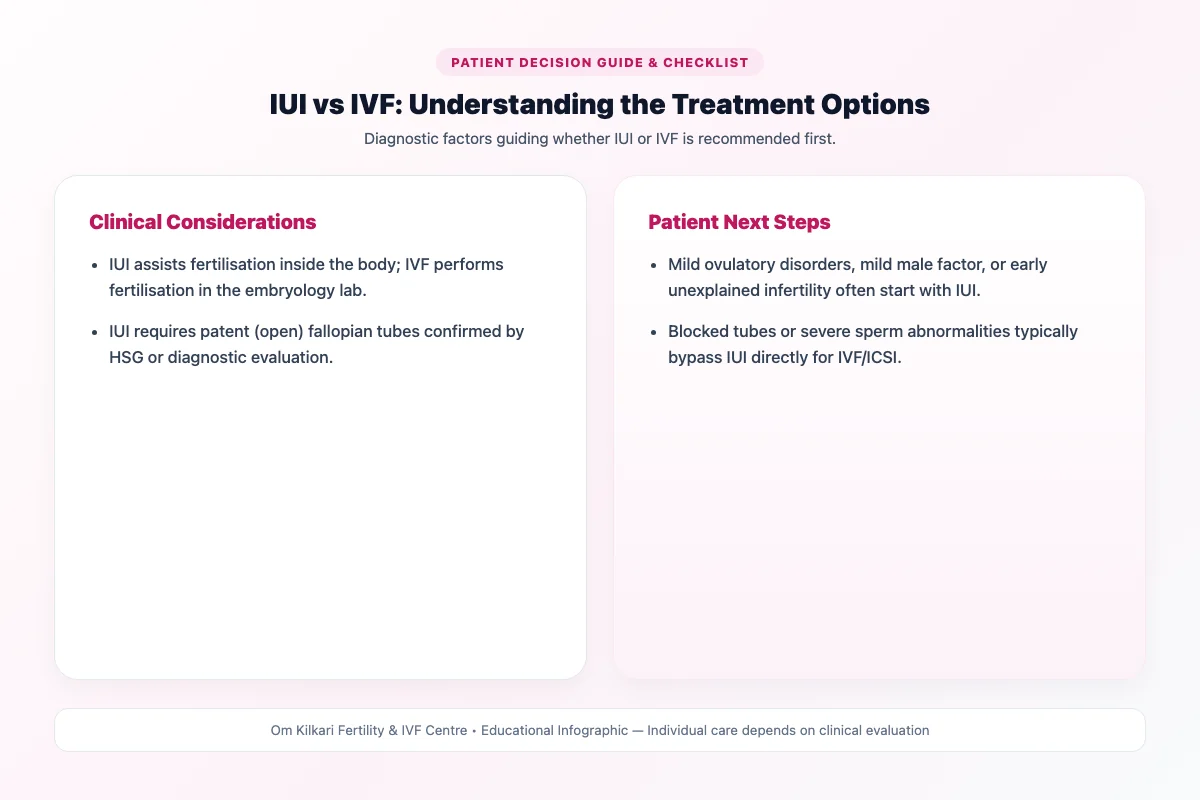
- IUI assists fertilisation inside the body; IVF performs fertilisation in the embryology lab.
- IUI requires patent (open) fallopian tubes confirmed by HSG or diagnostic evaluation.
- Mild ovulatory disorders, mild male factor, or early unexplained infertility often start with IUI.
- Blocked tubes or severe sperm abnormalities typically bypass IUI directly for IVF/ICSI.
How Intrauterine Insemination (IUI) Works
During an IUI cycle, ovulation is tracked via ultrasound (with or without mild oral/injectable ovulation medications). On the day of ovulation, a washed and concentrated semen sample is gently placed into the uterine cavity through a thin, soft catheter in a brief outpatient visit.
When Specialists Recommend Moving to IVF
If both fallopian tubes are blocked, sperm count/motility is too low for IUI, endometriosis is moderate-to-severe, or 3–4 well-timed IUI cycles have not resulted in pregnancy, specialists commonly discuss transitioning to IVF.
Your Journey Towards Parenthood Starts with the Right Guidance.
If you have been trying to conceive and would like to understand your fertility health, consult a qualified fertility specialist for personalised guidance.
Frequently Asked Questions
1. Is IUI painful or does it need anaesthesia?+
No. IUI is a quick, generally comfortable outpatient procedure similar to a routine pelvic exam and does not require anaesthesia.
2. How many IUI cycles are usually tried before considering IVF?+
Depending on female age and diagnosis, specialists often review progress after 3 to 4 monitored IUI cycles before discussing IVF.
Related Articles & Clinic Pages
Written By: Om Kilkari IVF Medical Team • Published: 2026-11-12
Authoritative Clinical References
Disclaimer: This article is for patient awareness and educational purposes only and does not replace personalised medical advice from a qualified fertility specialist.